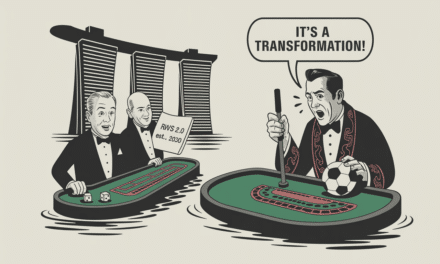

Caesars shareholders have approved Tilman Fertitta’s $17.6bn take-private deal, giving the Houston businessman the control he wanted and regulators a much larger question to answer. The cheque is agreed in principle; the FTC still gets to decide whether the combined casino and sportsbook operation can keep its full shape.
Shareholders Approved a Price, Not a Strategy
At a special meeting in Reno on September 22, 2026, shareholders voted 133,313,001 for the transaction, 4,276,986 against and 5,687,952 to abstain. Roughly 65.4% of outstanding shares backed the deal. That is a clear instruction to accept $31 a share in cash and stop waiting for another restructuring, cost programme or digital betting promise. It is not a detailed vote on Fertitta’s operating plan. Shareholders were offered certainty, and casino investors have learned that certainty can look unusually attractive after years of strategic resets.
The headline equity value is about $5.7bn. Add Caesars’ roughly $11.9bn to $12bn of debt and the price reaches about $17.6bn. That debt still requires interest, property maintenance, room upgrades, marketing and online customer acquisition after closing. The $31 cheque buys control; it does not buy a forgiving balance sheet. Fertitta is acquiring a cash-generating business with plenty of claims on its cash before the owner gets to celebrate.
The attraction is footprint. Fertitta already owns Golden Nugget and the Houston Rockets. Caesars adds casinos, resorts, licences, customer relationships and a nationally recognised sportsbook brand. Rebuilding that network state by state would take years, billions of dollars and a procession of suitability reviews. Buying Caesars is the shortcut to scale. Private ownership removes the daily share price spectacle, but scrutiny moves to lenders, gaming regulators, employees and the owner’s cash-flow model.
The Second Request Is the Real Gate
The FTC’s second request for information on September 14 extended the Hart-Scott-Rodino waiting period. It is not a rejection, but it means the agency was not satisfied with the first submission and wants the transaction opened up file by file. That raises review costs and gives the regulator more time and bargaining power. The request tells investors that this process will be measured in evidence and remedies, not optimistic deal slides.
Casino competition is often local. Caesars and Golden Nugget may overlap in one market and barely touch in another. Sports betting is licensed state by state, yet operators compete nationally for brands, technology, customers, promotional budgets and distribution. A larger private owner could cross-sell more aggressively, link rewards to wagering or demand better terms from partners. Those tactics could produce cheaper offers and a stronger loyalty programme, but they could also make it harder for smaller operators, independent casinos or rival betting platforms to reach customers. The central question is whether efficiencies reach customers or whether control over access, data and promotion makes rivals pay for entry.
TD Cowen believes the deal is more likely than not to clear, while JPMorgan cut its Caesars rating because of transaction risk. Both are market signals, not a clearance letter. The FTC could approve the deal, demand asset sales or impose other conditions, and it could sue if a proposed remedy is inadequate. A forced sale would be awkward for Fertitta: he could pay for a national platform and then surrender the assets that made it attractive. State gaming commissions and betting regulators remain separate gates. Washington can approve a merger while a state regulator keeps an ownership or suitability application on the desk.
Private Ownership Does Not Make $12bn of Debt Disappear
The debt burden is both the reason the transaction can work and the reason it can hurt. Fertitta gets a large revenue base and freedom to make decisions without explaining every quarter to public shareholders. He also inherits a business that must fund room renovations, casino upkeep, marketing, online promotions and interest payments before the owner gets to celebrate the empire. Any claim that no immediate major changes are expected should be read as transaction language, not a lifetime guarantee. Once the books are private, Fertitta can review properties, cut costs, sell assets, refinance borrowings or change the balance between physical casinos and online betting with less public noise. That flexibility may support investment, but it can also hide early signs of strain from people without a seat at the lenders’ table.
The agreement puts a price on delay. If the merger has not closed by June 26, 2027, shareholders receive a ticking payment of $0.007150 per share for each day under the deal terms, or about $2.61 per share over a full year. That is a meaningful incentive to keep the process moving, but it cannot cure an antitrust problem. Every month adds legal bills, financing uncertainty and management distraction. Lenders will care less about the romance of a national gaming empire than about cash flow, covenants and repayment.
The Next Fight Will Be Over People, Assets and Precedent
The governance reshuffle has already begun. Jesse Lynn and Ted Papapostolou, both appointed during the earlier Carl Icahn era, resigned from the board. That may be routine housekeeping as control changes hands, but it also removes reminders of the activist settlement that shaped Caesars’ recent politics. The shareholder vote ended one piece of boardroom theatre; it did not settle who defines the company once the doors close. Labour relations will be another test. The Culinary Union is optimistic about maintaining positive relations with Fertitta, a sensible opening position before a multibillion-dollar takeover. It is not a blank cheque. If management seeks efficiencies across hotels, casinos, food and beverage or support functions, the union will test whether continuity means keeping jobs and service standards or merely keeping the press release friendly.
A private Caesars would give public rivals a new headache. Fertitta could compete with fewer quarterly disclosure obligations and potentially more patience for a long restructuring. That may push other owners toward mergers, making an already concentrated sector more concentrated. More deals can create stronger operators, yet they can reduce consumer choice, increase pressure on workers and give owners more room to load assets with debt. For iGaming executives, the question is not only who owns Caesars. It is what ownership permits everyone else to try.
The next months will decide whether Fertitta bought a national platform or a heavily encumbered collection that must be trimmed before it can perform. If the FTC clears the transaction without major concessions, the test becomes cash generation: can Caesars pay for its properties, service its borrowings and fund digital betting without chasing growth at any price? If regulators require divestitures, the economics change before Fertitta takes control. The shareholder vote gave him permission to try. It did not give him the right to keep every asset, avoid every condition or turn $12bn of debt into someone else’s problem. Caesars now has a private future, but its regulatory clock is getting more expensive by the day.