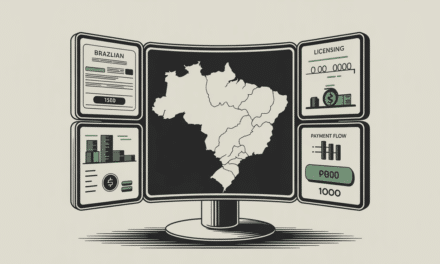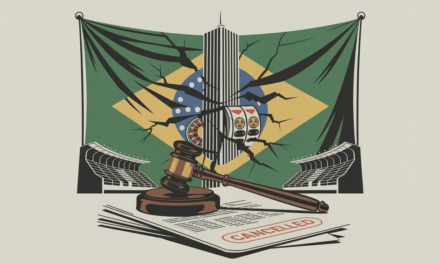
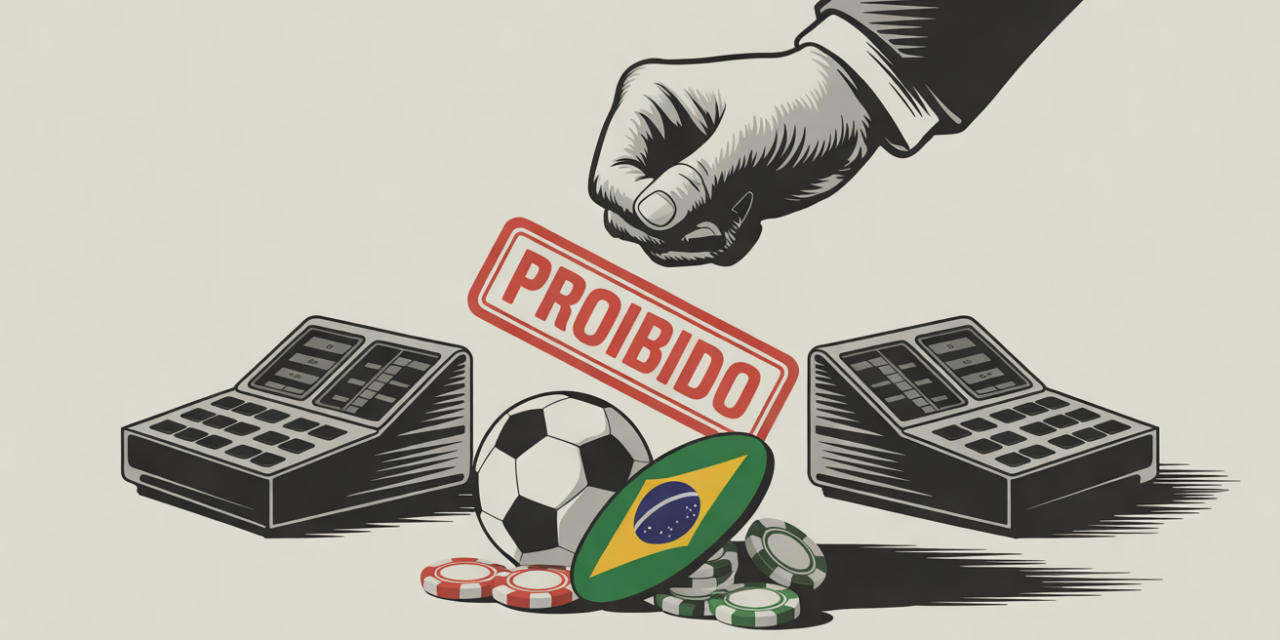
When President Luiz Inácio Lula da Silva announced that licensed betting operators would be banned from operating in Brazil effective October 6, 2026, the reaction from the industry was predictable: shock, outrage, forecasts of doom. What was less predictable — but entirely foreseeable in hindsight — is that Lula’s administration had telegraphed this move for months, treating a BRL 9.91-billion-revenue industry like a social ill rather than a regulated economic sector.
The Numbers That Make This Decision Indefensible
In the first eight months of 2026, licensed betting operators in Brazil generated BRL 9.91 billion in gross gaming revenue. These are not rogue operations; these are companies that went through Brazil’s hard-won regulatory framework, paid licensing fees, built compliance infrastructure, and served customers who would otherwise have accessed offshore or illegal alternatives. The regulated market was working by every measurable metric the government itself had established.
Lula’s stated motivation — that betting is a social harm, particularly for lower-income Brazilians — is not an argument against a licensed market. It is an argument for a better-designed one. Deposit limits, advertising restrictions, mandatory affordability checks, and cooling-off mechanisms are the tools of intelligent regulation. Prohibition is the tool of governments that have run out of ideas.
“Ban the licensed market, and you don’t eliminate gambling. You eliminate the data, the compliance, the taxes, and the consumer protections — and you hand the entire market to operators who answer to no one.”
The Prohibition Paradox Is Not a Theory — It’s a Track Record
The National Association of Licensed Gaming Operators (ANJL) issued an immediate response, warning that the ban could double the size of Brazil’s illegal gambling market. This is not hyperbole; it is the documented outcome of every gambling prohibition attempted in the modern era. When the UK restricted FOBTs in 2019, a subset of customers migrated to unregulated online alternatives. When the US ran PASPA for 26 years, it fostered the largest illegal sports betting market in the world — an estimated $150 billion annual market that generated zero tax revenue and zero consumer protection.
Brazil’s illegal gambling industry — known locally as “jogo do bicho” and its digital descendants — already operates at significant scale. The licensed market that emerged post-2024 was partially displacing those flows and bringing them into a taxable, trackable framework. The ban reverses that progress overnight.
The Geopolitical Timing Is Catastrophic for LatAm Confidence
Brazil’s regulatory journey was being watched across Latin America as a template. Colombia, Mexico, Argentina, and Peru were all at various stages of their own regulatory evolution, and Brazil’s 2024 framework was frequently cited as the regional benchmark. Lula’s reversal does not merely damage Brazil’s market — it sends a chilling signal to every investor evaluating regulated market exposure across LatAm: that regulatory risk in this region can materialize without warning, at presidential discretion, regardless of the economic case for an existing framework.
The operators who lose most here are not the offshore grey-market incumbents, who face no meaningful enforcement. The operators who lose are exactly those who bet on regulation: the ones who invested in compliance, paid taxes, built local teams, and played by rules that have now been unilaterally voided.
What Happens Next: Three Scenarios
Scenario 1 — Legal challenge succeeds. Industry associations mount constitutional challenges arguing that the ban violates property rights and the legitimate expectations of licensed operators. Brazilian courts stay the ban pending review. Most likely to produce a negotiated compromise over 6–18 months.
Scenario 2 — Ban holds, black market doubles. ANJL’s forecast materializes. The illegal market surges, tax revenues collapse, consumer protection evaporates. A future government reverses the ban after documenting the damage — but the reputational harm to Brazil as a regulated market takes a decade to repair.
Scenario 3 — Targeted carve-outs emerge. Sports betting (the most politically defensible format, given its association with football) receives a partial reprieve or separate framework, while casino products remain banned. This is the most politically plausible middle path, though it satisfies no one fully.
The Bottom Line
Lula’s betting ban is a decision that will be studied in policy schools for years — not as an example of effective consumer protection, but as a masterclass in how to manufacture the exact harm you claim to be preventing. The licensed market was imperfect. The illegal market it will feed is far worse.
The industry will adapt. The capital will move. The bettors will find alternatives. Only Brazil’s regulatory credibility — and its potential billions in tax revenue — will be left behind.