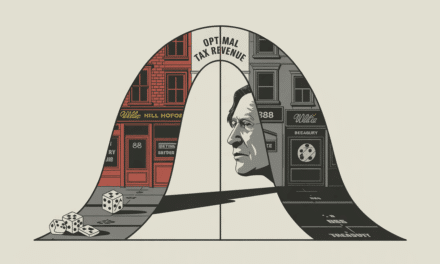

The prediction-market giant is pushing regulators to treat its contracts as MiFID II instruments rather than bets, chasing a single passport while national gambling authorities slam the door.
Polymarket is running a calculated lobbying campaign across Europe and the UK. The goal is straightforward and ambitious: persuade authorities to classify the platform as a financial services provider under MiFID II rather than an unlicensed gambling operator. Success would deliver a unified regulatory passport. Failure leaves it trapped in a fragmented patchwork of national bans.
The New York-based firm has held talks with the European Securities and Markets Authority (ESMA), the European Commission, and the UK’s Financial Conduct Authority. It has also engaged individual member-state supervisors. The core argument is that its binary event contracts function more like derivatives than wagers—an approach that has already secured Commodity Futures Trading Commission oversight in the United States.
Why the Classification Fight Matters
Prediction markets generate volume on politics, sports, elections, and macroeconomic outcomes. In the US, federal derivatives rules have given operators a degree of clarity. In Europe, the opposite is true. Gambling regulators treat most of these contracts as games of chance requiring local licences. Financial regulators see binary fixed-payout products as restricted instruments.
A MiFID II classification would, in theory, replace fifteen or more national gambling regimes with a single framework. That is the systemic prize Polymarket is chasing. The reality is more complicated. ESMA’s July guidance confirmed that binary contracts with fixed payouts linked to equities, indices, rates, currencies, or commodities already qualify as financial instruments under Annex I of MiFID II. Those same products fall under the long-standing national bans on marketing binary options to retail clients.
In short, the “financial” label Polymarket seeks may open institutional doors while slamming retail ones shut. That is the deeper structural tension: Europe’s dual regulatory architecture was never designed for event contracts that sit at the intersection of speculation, information aggregation, and gambling.
A Trail of European Setbacks
The lobbying push did not emerge in a vacuum. It follows a series of concrete reversals.
- France’s Autorité Nationale des Jeux banned Polymarket, treating its service as unauthorised gambling.
- In June, nine European gambling regulators issued a joint warning against unlicensed prediction platforms and pledged coordinated enforcement.
- Italy blacklisted the site, ending Polymarket’s sponsorship of Serie A club Lazio.
- Similar blocks or restrictions have appeared in Spain, the Netherlands, Belgium, Portugal, and elsewhere.
These actions reflect a clear institutional preference. National gambling authorities view prediction markets as high-risk, high-volume betting products that bypass player-protection rules, age limits, and tax obligations. The joint June statement was not bureaucratic theatre; it was a signal that Europe’s gambling establishments intend to treat the category as their turf.
ESMA’s Double-Edged Guidance
ESMA’s July statement offered Polymarket a partial opening and a simultaneous constraint. Contracts tied to certain financial underlyings are derivatives under MiFID II. Everything else—politics, sports, celebrity outcomes—remains in the gambling silo or drifts into MiCA territory if tokenised.
The regulator also reminded firms that even non-retail distribution of qualifying instruments requires authorisation. Polymarket currently holds none. The guidance therefore functions less as an invitation and more as a map of the minefield: pursue financial status and accept binary-option restrictions, or stay in the gambling lane and negotiate country by country.
Transatlantic Pressure Compounds the Problem
The European campaign coincides with fresh legal pressure at home. New York State has sued Polymarket for operating an unlicensed gambling business, seeking an injunction, fines, and restitution. The action mirrors an earlier suit against rival Kalshi. State attorneys general are testing whether federal derivatives oversight truly preempts local gambling statutes. The parallel fights on both sides of the Atlantic reveal the same underlying conflict: when a product aggregates information and transfers risk through binary contracts, different regulators see different primary harms and different legitimate interests.
Root Causes, Not Surface Friction
This is not a simple licensing dispute. It is a clash of regulatory philosophies. Gambling regimes prioritise consumer protection, problem-gambling externalities, and fiscal capture. Financial regimes prioritise market integrity, disclosure, and capital formation. Prediction markets sit awkwardly between the two because their economic function—price discovery on future events—looks like information markets, while their user behaviour and payout structure look like sportsbooks.
Polymarket’s strategy is rational. A single MiFID passport is cheaper and faster than a dozen gambling licences. Yet the deeper systemic issue remains unresolved: Europe has not decided whether event contracts are primarily financial instruments or primarily games of chance. Until that classification is settled at a political level, operators will continue to lobby, national authorities will continue to block, and users will continue to route around the restrictions with VPNs.
For now, Polymarket is doing what any high-valuation platform does when the regulatory perimeter is contested: it is trying to choose its regulator before the regulator chooses it. The outcome will shape not only one company’s European footprint, but the future perimeter of prediction markets across the continent.