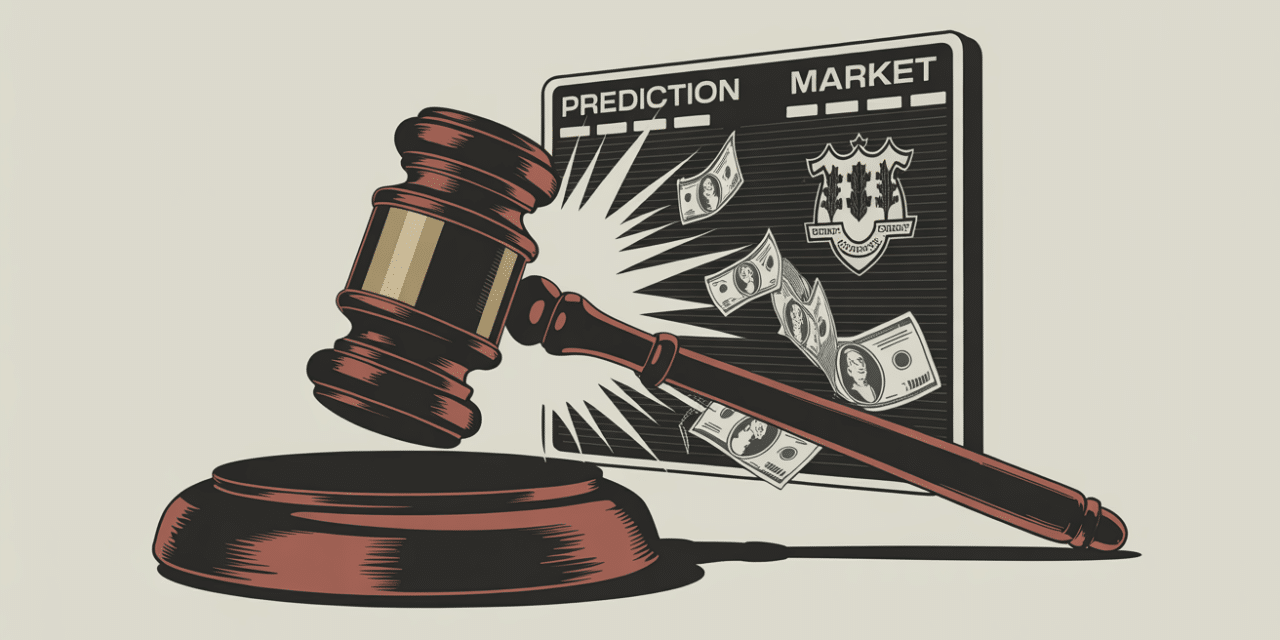
Connecticut’s enforcement lawsuit against Kalshi isn’t a legal dispute. It’s the opening of a second front in a regulatory war that will determine who controls the next trillion-dollar layer of the American gambling economy.
From Jurisdictional Sparring to Revenue Clawbacks
For the past 18 months, the prediction market industry has operated on a simple thesis: federal preemption under the Commodity Exchange Act shields CFTC-registered prediction platforms from state gambling laws. It’s a clean legal argument. It’s also, increasingly, a losing one in practice.
Connecticut’s decision to stop merely defending its regulatory authority and instead actively seek injunctive relief, financial penalties, and the disgorgement of revenue already earned by Kalshi in the state marks a qualitative shift in the conflict. States aren’t just asking prediction markets to stop. They’re demanding the money back.
This is no longer a philosophical dispute about regulatory classification. It’s enforcement. And enforcement has a way of concentrating minds.
The Multifront Battlefield
Zoom out, and the picture is consistent: Novig is fighting simultaneous legal battles in Massachusetts and New Mexico, seeking stays in both states while its preemption arguments work through the courts. Nevada has weighed in on the North Carolina tax case, arguing that state-level taxation undermines Kalshi’s preemption claims. The CFTC’s own roadmap has drawn scrutiny over manipulation concerns.
Meanwhile, Kalshi is playing offense with remarkable audacity — signing deals with MLB teams including the Dodgers, running advertising in California, deploying lobbyists in Sacramento. The California push is strategically sound: the state has blocked traditional sports betting at the ballot box twice. Prediction markets see a regulatory opening where sportsbooks have repeatedly failed.
But California also has one of the most sophisticated regulatory enforcement apparatuses in the country. The question isn’t whether prediction markets can get into California. It’s whether they can get in before the state decides they look too much like sports betting to be treated differently.
The Incumbent Counterplay
DraftKings and FanDuel have watched the prediction market insurgency with the calm of operators who understand what structural moats actually look like. Their data relationships with Genius Sports give them leverage in NFL sponsorship negotiations that no prediction market platform can replicate. Official data rights, embedded into broadcast infrastructure, licensed to league partners — this is a layer of the ecosystem that prediction markets simply don’t control.
The traditional sportsbooks aren’t going to win by outmaneuvering Kalshi in court. They’re going to win by making themselves indispensable to the league ecosystems that provide the underlying event markets. Prediction markets need content. The incumbents own the pipes.
Capital Flows Don’t Lie
Allwyn’s 27% Q2 revenue surge — driven substantially by its PrizePicks acquisition — tells you everything about where institutional capital thinks the winner will be. PrizePicks sits in the DFS-to-prediction-market adjacency space, and Allwyn’s willingness to pay a premium for that exposure reflects a bet that regulated, sports-adjacent prediction products will ultimately be absorbed into the mainstream gambling framework rather than displacing it.
Evolution’s board rejecting Kenneth Dart’s takeover offer — with shares trading 20% above the bid — tells you something else: live casino infrastructure is still dramatically undervalued by financial markets relative to the operators who depend on it. Evolution is to live casino what Genius Sports is to data. Structural, sticky, extraordinarily difficult to replicate.
The Regulatory Divergence Problem
Beyond the US prediction market wars, the global regulatory picture is fragmenting in ways that create compounding operational complexity. Brazil’s gambling legislation remains gridlocked between executive and legislative agendas. New South Wales is pushing harm-minimization reforms that will reshape player account management obligations. Malaysia has confirmed it has issued zero new gambling permits since the 1990s. Every major growth market is simultaneously opportunity and compliance obstacle.
The operators who will extract maximum value from this environment are not those with the best product. They’re those with the best regulatory intelligence infrastructure. Knowing when a market is about to open — and when it’s about to slam shut — is now a primary competitive capability.
What Happens Next
The Connecticut v. Kalshi enforcement escalation will produce a federal court ruling that becomes the most-cited precedent in the prediction market regulatory debate for the next decade. Either federal preemption holds and Kalshi operates as a CFTC-regulated national platform, or the states establish that they can treat prediction markets as gambling and regulate — or ban — them accordingly.
There is no middle path. The industry’s current “regulatory grey area” phase ends when that ruling lands.
In the meantime, the market will keep moving. Kalshi will sign more sports deals. States will file more enforcement actions. DraftKings and FanDuel will quietly tighten their grip on the data layer. And Allwyn will keep acquiring anything that looks like the future of regulated sports prediction.
The prediction market war has gone hot. The states are winning on points. But the fight hasn’t gone to the judges yet — and in this industry, every round matters.