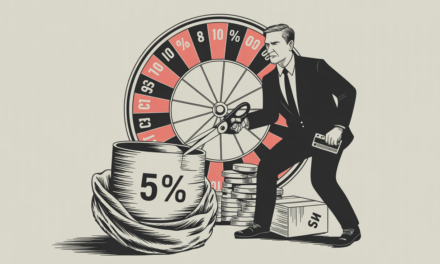

On 16 July 2026, the Court of Justice of the European Union delivered a judgment that quietly redraws the economics of video acquisition in the gambling industry. Ruling on an Italian preliminary reference pitting AGCOM against Google over YouTube videos promoting gambling in breach of the Decreto Dignità, the Court settled two questions — the second of which will resonate far beyond Italy.
What the Court held
First step: Google remains, in principle, a hosting provider. The “gambling” exclusion in the e-Commerce Directive (Article 1(5)(d)) covers gambling advertising itself — an activity intrinsically linked to gambling — but not the activity of hosting that advertising, which is deemed neutral with respect to the content stored. The provision of hosting services, even where the hosted content is unlawful gambling advertising, therefore remains governed by Directive 2000/31.
Second step — and this is where everything shifts: Google loses the benefit of the liability exemption. The Court held that a platform operator which has entered into a commercial partnership with advertising revenue sharing with a channel owner, and which in that context has reviewed the channel’s content — main theme, most-viewed videos, metadata — no longer plays the neutral, technical and passive role required by Article 14. It does not matter that the review is automated. It does not matter that it serves only to verify eligibility for the monetisation programme. Above all, it does not matter that the platform lacks exhaustive knowledge of every video: knowledge of the channel’s “essential content” is enough to exclude neutrality.
The underlying facts are telling: monetised YouTube channels broadcasting gambling videos and inviting users — with no age verification whatsoever — to submit videos of their winnings in exchange for payment. AGCOM had fined Google €750,000 and ordered the removal of more than 600 videos.
Why this is structural
The formula is worth remembering: monetisation creates knowledge, and knowledge kills neutrality.
Until now, the L’Oréal/eBay and YouTube/Cyando case law required an “active role of such a kind as to give knowledge of, or control over” the content. Judgment C-421/24 significantly lowers that threshold: the mere admission process to a revenue-sharing programme — a standardised, automated process applied to millions of channels — is now sufficient to establish that knowledge, provided it involves a review of the content.
And this mechanism is not a YouTube peculiarity. It is the very architecture of the YouTube Partner Programme, the TikTok Creator Fund, Twitch’s Affiliate/Partner programmes, and Meta’s Reels bonuses. Any platform that screens entry into its monetisation programme by reviewing applicants’ content is, mechanically, in Google’s position.
Nor is the effect transitional: the judgment interprets Directive 2000/31, but the Digital Services Act replicated its exemption regime almost verbatim (Article 6 DSA). The “revenue share = review = knowledge of essential content = loss of neutrality” framework will naturally migrate into DSA litigation.
Cascading impacts
For platforms, the rational response is predictable: tighter gambling screening at the entry point of monetisation programmes, pre-emptive demonetisation or geo-blocking of casino and betting channels in ad-restricted jurisdictions, and potentially the outright contractual exclusion of the gambling vertical from revenue-sharing mechanisms in certain countries.
For licensed operators, the ruling is paradoxically good news: it dries up the primary acquisition channel of offshore operators, which thrived on monetised creators outside any regulatory framework. Conversely, any operator — licensed or not — relying on paid streamers in restrictive markets will see that channel shut down upstream, by the platform itself, with no room for negotiation.
For affiliates, this is the most exposed group. The monetised video-affiliate model (slots channels, win compilations, casino streams) now carries a double risk: direct sanctions under national advertising law, and pre-emptive deplatforming by platforms unwilling to carry the liability. The strategic conclusion is unavoidable: reallocate towards owned assets — comparison sites, SEO, proprietary CRM databases — and reduce dependence on third-party platforms.
For influencers and creators, the judgment closes the “I make content, not advertising” ambiguity: gambling promotion, even indirect, falls outside e-commerce protection and is fully subject to national law. In France, combined with the 2023 influencer law, the gambling monetisation space for a mainstream creator becomes close to nil — and platforms will contractually shift the residual risk onto creators themselves.
The next frontier: Google Ads, AdSense and the SERPs
The judgment’s logic does not stop at YouTube — but it does not transpose everywhere in the same way, and the distinction is essential.
Google Ads: near-automatic transposition, and the most explosive angle. Since Google France/Louis Vuitton (C-236/08), AdWords potentially benefited from Article 14 subject to a neutrality condition. Yet the Google Ads process ticks every box of the C-421/24 test — and then some: active review of every ad before serving, jurisdiction-specific gambling certification, direct pay-per-click remuneration. If the automated review of a channel at the entry point of a revenue-sharing programme is enough to create “knowledge of the essential content,” the individual approval of a gambling ad creates it a fortiori. The 2010 safe harbour is, for the gambling vertical, living on borrowed time: a regulator identifying an unlawful gambling ad served through Google Ads can now target Google directly, not merely the advertiser.
AdSense: the Trojan horse of the “owned” model. An affiliate site — even fully owned — monetised through AdSense replicates exactly the structure condemned by the judgment: advertising revenue sharing plus a site review at programme admission. Migration to owned assets is therefore only a refuge if monetisation is direct (operator deals, direct CPA); a comparison site running AdSense remains inside the risk perimeter, with Google in the same role it occupied before AGCOM.
Organic SERPs: no in law, yes in practice. Legally, organic search escapes the test: no commercial partnership, no revenue sharing — crawling alone, absent a monetisation link, does not destroy neutrality. Extrapolating the judgment to organic results would be an over-reading. But the risk is one of policy, not law: Google has historically over-applied through internal policy what the law does not yet require (country certifications, advertising geo-restrictions). Algorithmic de-prioritisation or geographic filtering of gambling affiliate content in restrictive jurisdictions is a plausible 24-month scenario, driven by pure de-risking. Owned SEO reduces dependence on social platforms; it does not remove dependence on Google — you change floors, not buildings.
What to watch
- Updates to monetisation programme terms (YouTube, Twitch, TikTok) on the gambling vertical by the end of 2026.
- Adoption of the C-421/24 framework by national regulators — the ANJ in France, the KSA in the Netherlands and the GGL in Germany now hold a direct lever against platforms, not merely against advertisers.
- The first DSA litigation transposing the “knowledge of essential content” test.