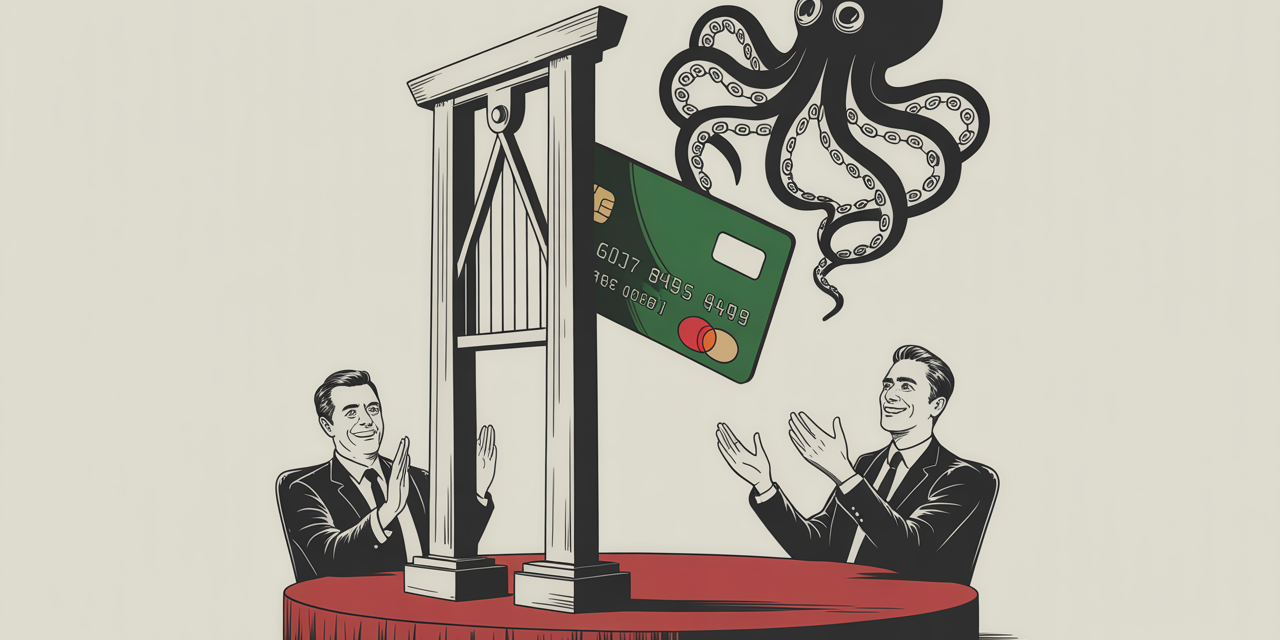
A credit-card gambling ban makes a photograph: borrowed money stopped at the door, officials nodding beside a fresh rulebook. Behind it, a betting app can still drain a distressed customer’s checking account in minutes, then send a tailored nudge to return tomorrow.
Plastic Was Already on Its Way Out
Ohio’s Casino Control Commission is considering formal limits on credit-card deposits, and Colorado has examined comparable restrictions in its sports-betting rules. BetMGM and Caesars have said they will stop accepting credit cards for betting deposits amid mounting scrutiny. The logic is sound: credit funds gambling with unsecured debt, cash-advance coding can add fees and punitive interest, and a losing bet does not improve because Visa paid.
The United Kingdom reached that conclusion in 2020. The US is importing the principle after the payments market moved on. US sportsbooks and online casinos saw credit cards become a declining, often single-digit share of deposit volume. Issuer blocks, processor risk controls, state rules, declines and consumer reluctance made plastic unreliable. Operators adapted through debit cards, ACH and instant-banking rails, PayPal, Venmo, Apple Pay, bank-linked wallets and account-to-account rails. High-value customers commonly use direct bank arrangements, not revolving credit.
A ban removes one hazardous source of funds. It does not answer the harder affordability question across the rails that remain. A card may decline a $500 deposit because of issuer controls or available credit. An instant bank link can pull $500, then $1,000, then $2,000 from checking with barely a pause once credentials are verified. Debt can wreck a household slowly through interest; cash depletion can wreck it by Friday, when rent, payroll deductions and utilities hit an account the app has stripped. One problem photographs well at a hearing. The other produces cleaner conversion.
The Checkout Funnel Has a Job, and It Is Not Restraint
Operators know where deposits fail. Product teams measure abandonment by screen, payment type, verification step and device. They test stored credentials, biometric approval, wallet handoffs and one-tap replenishment because every extra field lets an impulse cool. A completed deposit creates wagering volume; wagering volume creates gross gaming revenue; that revenue supports tax, marketing and executive-bonus targets.
Responsible-gambling prompts sit inside this machinery. A reminder to set a limit can appear beside a flow designed to make funding feel as routine as ordering lunch. It shows a business where safety controls compete with quarterly revenue targets built to minimize hesitation.
The credit-card retreat is convenient. BetMGM and Caesars can truthfully say they removed a debt-linked option, but the channel was already marginal and substitutes are abundant. They win a responsible-gambling headline without dismantling the mechanics that matter: repeated deposits after losses, reactivation campaigns, bonus offers, VIP outreach and limits raised with little more than a click.
Card processing brings interchange, network fees and chargeback exposure. ACH and bank-to-bank rails can be cheaper, more reliable and better integrated with a betting wallet. A ban can reduce one harm vector while accelerating a shift operators already wanted. The operator gets lower costs and better optics; the regulator gets a clean announcement; the at-risk customer gets another button.
Most recreational bettors will barely notice. The vulnerable minority will. During a loss-chasing spiral, a declined card can be a crude circuit breaker. A bank account linked once and available forever removes even that ugly pause.
Regulators Should Audit Velocity, Not Just Funding Source
Ohio and Colorado should treat a ban as a floor, not a finish line. The central question is what occurs after money reaches the wallet. How many deposits arrive within an hour of a sharp loss? How quickly can limits rise? Do customers cycle through debit, ACH and digital wallets after one method is restricted? Does a large net loss trigger a bonus, push notification or VIP-host contact? When a player requests a cooling-off period, do marketing databases suppress that account across every brand and channel?
Those are auditable operating questions, not moral posturing. A serious regime would calculate deposit velocity and loss-chasing indicators across payment methods, rather than treating every card, wallet and bank connection as a separate universe. It would mandate meaningful pauses after sudden net losses or rapid repeat deposits, restrict inducements to customers escalating, and force VIP programs into daylight.
VIP schemes are not merely hospitality. A host’s compensation and retention targets can put commercial pressure directly against worsening behavior. Regulators should require records of host contacts, deposit discussions, bonuses, affordability reviews and intervention decisions. They should inspect whether safer-gambling outreach slowed play or simply supplied compliance wording before another deposit invitation.
That is where enforcement gets expensive and politically awkward. Operators need systems that link identities across funding methods and brands; regulators need analysts who inspect event-level logs rather than glossy aggregate reports. Privacy and data-security controls must be strict. Yet technical difficulty is a poor excuse from companies able to identify a customer likely to answer a same-game parlay offer before halftime.
The Offshore Threat Is Real, but It Is Also a Lobbying Tool
Tighter rules have trade-offs. Clumsy caps can inconvenience ordinary customers, and determined gamblers can open alternate accounts, use another payment method or migrate to offshore sites without meaningful protections. Those risks are real. They are also inflated into a veto on accountability. Licensed operators won market access by promising a supervised alternative. If modest friction sends customers offshore, the legal product’s edge plainly depends on frictionless access to money.
The Next Two Years Will Expose the Difference Between Policy and Performance
More states will bar credit-card gambling deposits over the next 12 to 24 months. The measure is familiar, politically painless and hard for a licensed operator to oppose. Companies will announce voluntary bans before mandates arrive; compliance teams want certainty and investor-relations teams want the release.
The test starts after applause. If states celebrate the disappearance of a payment method while instant bank funding, behavioral targeting and VIP loss-chasing continue unchanged, the mix shifts while the risk system remains. Credit-card bans are sensible. Calling them a cure for problem gambling is theater, with a responsible-gambling logo stapled to the curtain.