
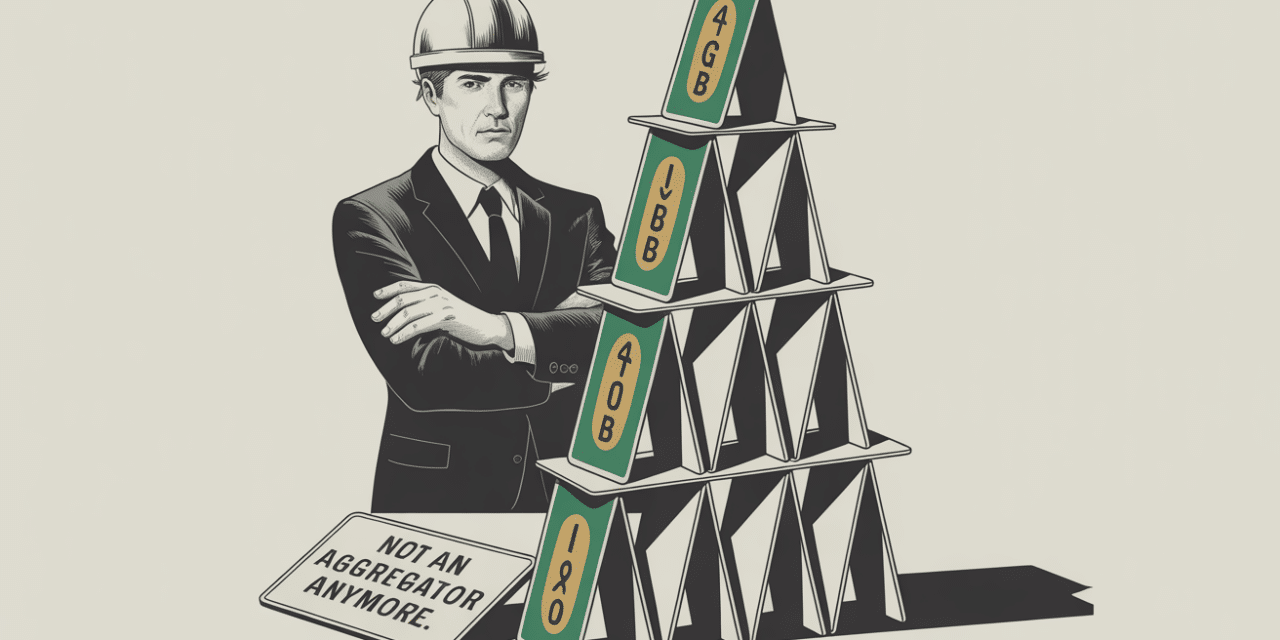
Bragg Gaming just spent $9 million in all-stock consideration to buy Drayton International, and the deal size is almost beside the point. What matters is the structural logic underneath it – a mid-tier B2B supplier making a deliberate architectural bet on consolidation before someone else consolidates them.
The Deal in Plain English
Bragg handed over 4.5 million shares at $2.00 each for Drayton International – a holding entity with equity stakes in five game development studios, including Boomerang Studios, a clutch of proprietary technology platforms, and over 100 developed titles. Closing is expected in Q3 2026, pending regulatory sign-off.
Alongside the announcement, Bragg confirmed that Matt Davey — a name that carries genuine weight in this industry — takes the non-executive chairman seat post-closing. Davey arrives with roughly a 10% ownership stake. He is not a boardroom ornament. He has skin in the game, which changes the governance calculus considerably.
The timing is deliberate. Bragg reported Q1 2026 revenue of €25.7 million — a number that says the business isn’t hemorrhaging, but also isn’t at a scale where organic growth alone secures long-term competitive positioning. At this revenue level, you either get bigger fast or you become an acquisition target yourself. Bragg’s leadership appears to have done the math.
The ‘Ecosystem Architect’ Framing – Strategic Clarity or Marketing Fluff?
CEO Matevž Mazij has been explicit about the strategic pivot: Bragg is positioning itself as an ‘ecosystem architect’ rather than a conventional B2B content supplier. Strip away the buzzword layer, and what Mazij is actually describing is a retreat from low-margin aggregation — where you’re a middleman distributing other people’s content for thin fees — toward a model built on proprietary content and platform ownership, where the margin profile looks fundamentally different.
This is not a radical insight. Every mid-tier B2B supplier in iGaming has been having this conversation internally for years. The aggregation model that worked brilliantly as a growth mechanism in the 2010s became a structural trap. You scale revenue, but margins stay compressed because you’re permanently dependent on third-party content owners who have their own distribution ambitions. The only sustainable exit from that trap is owning the content yourself.
What makes Bragg’s move credible rather than aspirational is that they’re pairing the rhetoric with actual M&A activity. Drayton’s portfolio of studio stakes gives Bragg direct access to proprietary game mechanics and development capacity without building from scratch — slower, more expensive, and operationally messier. The all-stock structure preserves cash, which matters when you’re a mid-tier player without a war chest.
The cynical read? ‘Ecosystem architect’ is what every supplier says when they’re trying to justify a content consolidation strategy to investors who have heard the same pitch fifteen times. The question is whether Bragg can actually execute the integration and cross-sell across verticals, or whether this becomes a collection of studio stakes that never coheres into anything resembling a unified platform.
The ADW Angle Nobody Is Talking About Loudly Enough
Buried in the deal rationale is something that deserves more scrutiny: Bragg’s explicit interest in the US advance deposit wagering market through Drayton’s existing exposure. ADW — horse racing’s digital wagering infrastructure — occupies a peculiar regulatory position in the United States. It operates under a framework that predates the post-PASPA sports betting explosion, giving it established legal pathways in states where online casino gaming remains locked out.
For a B2B supplier trying to build a US footprint without waiting on the glacial pace of iGaming legalization state by state, ADW exposure is strategically useful. It’s a real-money, regulated, digital wagering market that the major sportsbook operators have largely ignored because it doesn’t fit their brand architecture. That creates genuine space for mid-tier content and platform providers to establish market position before the tier-one money arrives.
If Bragg can thread its proprietary game content and player engagement mechanics into ADW-adjacent platforms, it potentially carves out a differentiated US presence that isn’t simply waiting in line behind DraftKings and FanDuel for table scraps. The downstream consequence is real: early positioning in ADW could become the bridgehead for a broader US content play once more states open up, rather than starting from zero when the market finally moves. That’s a smarter angle than most give it credit for.
What This Signals for Sector-Wide Consolidation
Bragg’s move doesn’t exist in isolation. The mid-tier B2B iGaming supplier space has been under structural consolidation pressure for three years. Operators are trimming their supplier rosters. The major platform providers are building proprietary content studios in-house. Regulators in key markets are raising compliance barriers that smaller studios cannot absorb alone.
The result is a Darwinian squeeze on anyone sitting in the middle: too big to survive as a niche specialist, too small to compete head-on with tier-one platforms. The rational response is exactly what Bragg is doing — consolidate content and platform capabilities, build vertical depth, and present operators with a broader value proposition than any single-product supplier can offer. The alternative is irrelevance, dressed up as independence.
Matt Davey’s appointment as chairman sharpens this read considerably. Davey has a track record of building and scaling iGaming businesses through exactly this kind of strategic consolidation. His presence signals that the Bragg board is serious about executing a multi-deal thesis, not announcing a single transaction and calling it a strategy. He’s done this before. He knows what the next two moves look like.
Expect Bragg to keep hunting. The Drayton deal is a statement of intent, not a destination.
The Execution Risk Nobody Should Ignore
All-stock deals preserve cash but create their own pressure. Bragg’s share price performance over the next 12 to 18 months directly determines the real value of what Davey and the Drayton stakeholders actually received. If the stock underperforms, the alignment of interests that makes this deal structurally clever starts to fracture — and fractured alignment in a studio portfolio integration is a slow-motion disaster.
Integrating five studio stakes with different cultures, pipelines, and technical architectures is not a clean process. The ‘games-first’ strategy only delivers the promised margin improvement if Bragg can push proprietary titles through its distribution network at volume, which requires operator buy-in that has to be earned. No operator upgrades their content shelf because a supplier issued a press release about becoming an ecosystem architect.
Bragg has articulated a credible strategic direction. The Drayton acquisition is a meaningful step toward executing it. Whether the company has the operational discipline to turn an ‘ecosystem architect’ vision into actual ecosystem economics — real margin expansion, real cross-vertical distribution, real US market presence — is the question the next several quarters will answer, whether leadership wants them to or not.