
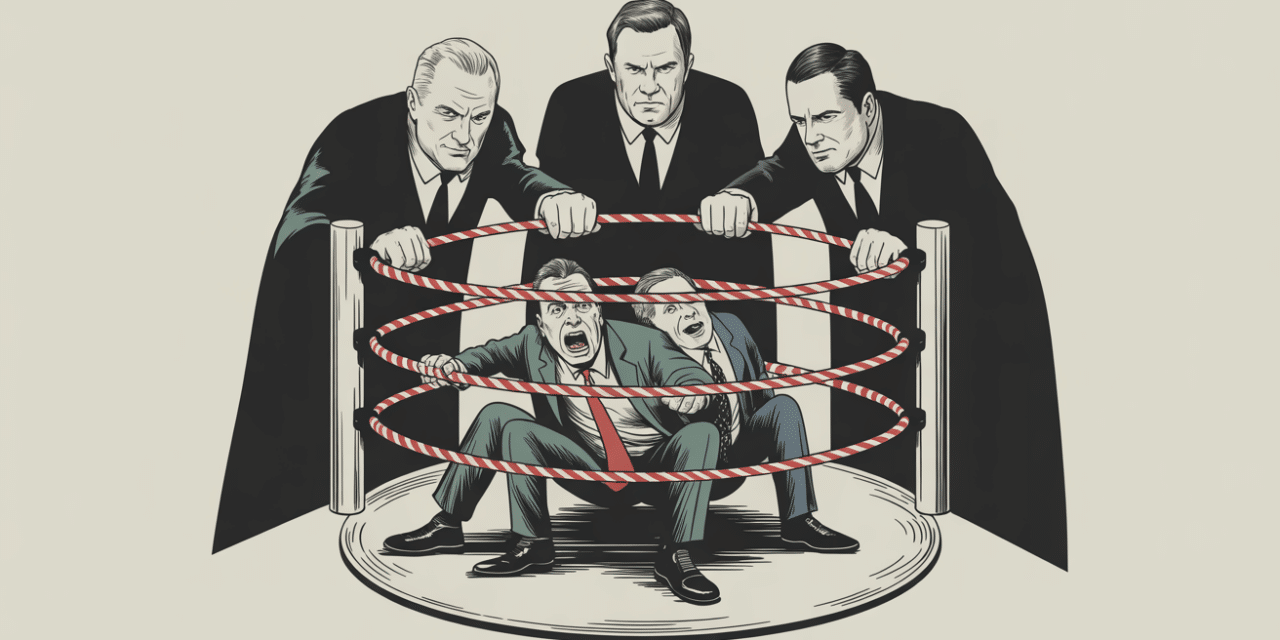
he political weather around gambling has been shifting for years. What’s happening right now across the EU, UK, US, and Brazil looks less like gradual change and more like a pressure system that’s about to break — and it’s breaking on every front simultaneously.
Entain CEO Stella David called gambling sponsorships in football “criminal” last week. Let that sit for a moment. The chief executive of one of the world’s largest gambling operators — a company whose brands are plastered across Premier League shirts and stadium hoardings — just told regulators to come and take those deals away. That’s not a slip. That’s a calculated strategic position, and it tells you everything about where the smart money thinks this is heading.
Entain’s Self-Regulatory Gambit
David’s comments weren’t altruism. They were competitive positioning dressed as conscience. If the UK government is going to ban football gambling sponsorships anyway — and the White Paper’s voluntary code buys time, not permanence — then the operator that calls for reform first gets to define the narrative. Entain has the brand diversification and balance sheet to absorb the loss of football marketing inventory. Smaller operators that have built their entire acquisition funnel around shirt deals and matchday advertising don’t have that cushion. They get crushed by the same rule change that barely dents a tier-one player.
This is how incumbents use regulation as a moat. This is igaming’s 2024 playbook.
The UK also just announced the launch of its largest independent gambling-harms research centre. More data, more scrutiny, more ammunition for the next wave of restrictions. The research centre isn’t the threat — it’s the precursor to one.
EU Age Verification: When Policy Signals Become Market Events
Proposed EU-wide age verification rules hit gambling stocks hard enough to be noticed. Markets are pricing in the compliance cost, the friction on customer acquisition, and the structural revenue impact of mandatory identity checks at the point of access — not just account creation.
Age verification done properly — real-time, standardised, cross-border — is genuinely difficult and expensive. The UK’s own post-GDPR attempts have been messy. An EU-wide system covering 27 member states, different national ID infrastructures, and varying data privacy regimes is exponentially more complex. Operators know this. Investors know this. The stock reaction wasn’t panic — it was rational repricing.
The downstream consequence is consolidation pressure. Complying with stringent age verification across multiple EU jurisdictions requires technology investment that only tier-one operators can absorb at scale. Mid-market players operating across three or four EU markets are facing a build-or-partner decision that will reshape the competitive map over the next 24 months. Some of those companies will be acquired at distressed valuations. Others will exit markets quietly. Neither outcome makes headlines, but both change the industry structure permanently.
The United States: Three Problems Converging at Once
America’s regulatory situation is a patchwork, and right now it’s tearing at the seams in three distinct places simultaneously.
First, credit cards. Maryland is among the states moving to prohibit credit card use for gambling transactions. The logic is straightforward: credit cards let people gamble with money they don’t have, and that’s a harm vector. The operational consequence is equally straightforward – deposit conversion rates drop, and payment product teams earn their salaries solving it.
Second, sweepstakes casinos. Oklahoma’s governor vetoed a bill that would have banned online sweepstakes casinos outright. For now. The sweepstakes model — using virtual currency and free-to-play mechanics to operate in jurisdictions without licensed casino frameworks — has always been a regulatory arbitrage play. It worked because regulators couldn’t agree on whether these products were gambling. That window is closing. The AGA isn’t mincing words: prediction markets are, in their view, the next sweepstakes-style threat to regulated gambling’s legitimacy and tax base.
Which brings us to the third problem: prediction markets. The AGA’s declaration that platforms like Kalshi represent a sweepstakes-scale regulatory challenge is a significant escalation. These platforms operate under CFTC oversight as derivatives exchanges, which lets them offer event contracts — including on sports outcomes — without being classified as sports betting operators. The licensed sportsbook industry, which has spent billions acquiring state licenses, sees this as an existential competitive threat. They’re not wrong. If you can offer effectively the same product through a federal derivatives loophole at a fraction of the compliance cost, the economics are obvious.
This fight is going to get loud. The CFTC, state gambling regulators, and Congress will all have opinions. None of those opinions will align, and the litigation calendar is going to be busy.
Brazil’s Black Market Warning Is the Regulatory Dilemma in Pure Form
Brazil’s IBJR has put a number on the cost of over-restriction: $2.16 billion in lost tax revenue if the Desenrola programme — which blocks indebted bettors from accessing licensed platforms — drives users toward unregulated operators. That figure isn’t speculative hand-waving. It’s a calibrated estimate of what happens when harm-reduction policy creates a worse harm.
This is the central policy dilemma that regulators in every jurisdiction are quietly terrified of and publicly refuse to acknowledge: if you make licensed gambling restrictive enough, you don’t eliminate demand. You redirect it to operators who don’t check ages, don’t enforce responsible gambling limits, don’t pay taxes, and don’t respond to law enforcement. Brazil’s regulators are being asked to choose between two bad outcomes. The IBJR is making sure they understand the economic cost of choosing the wrong one.
Every regulator reading about Brazil’s situation — and they are reading about it — is running the same mental calculation for their own market.
The Industry’s Real Strategic Problem
What makes this regulatory moment different from previous cycles is the simultaneity. Operators aren’t dealing with one jurisdiction tightening rules while others hold steady. The EU, UK, US, and Brazil are all moving in broadly restrictive directions at the same time, across marketing, payments, product, and distribution.
The marketing channel is under attack through sponsorship reform. The payment stack is being constrained through credit card bans. The product perimeter is being challenged through sweepstakes and prediction market crackdowns. Distribution is being revisited through age verification mandates. There is no part of the core operator business model that isn’t being touched. That’s new. That’s genuinely new.
The operators who come through this intact will be the ones who get ahead of the regulatory curve rather than throw legal fees at rearguard actions. Entain’s Stella David, whatever you think of the self-interest behind her football sponsorship comments, has read the room correctly. The companies still fighting every restriction in every market are burning capital on a position they’re going to lose anyway — just slower and at greater cost.
The perimeter is tightening. The question for every operator right now isn’t whether to adapt. It’s whether they move early enough to have any say in what they’re adapting to.