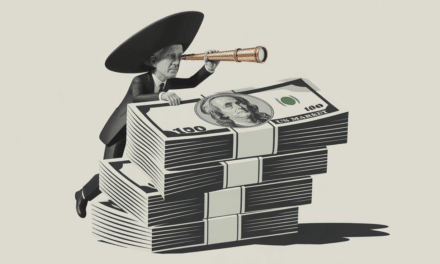

Colorado spent five years treating mobile sports betting as a clean fiscal trade: authorize the apps, collect the tax, fund a few responsible-gambling messages, and label the result consumer choice. Senate Bill 131 is a belated recognition that the product was never clean. It was a customer-acquisition machine built to turn a phone, an impulse and a payment method into another wager before the user had time to reconsider.
The legislature has voted to add resistance to that machine. Governor Jared Polis now decides whether it becomes law. The harder question comes after that: whether a six-deposit daily limit is meaningful restraint or just a manageable annoyance for companies that have spent years monetising the removal of friction.
The Bill Moves Beyond Slogans
The Senate passed SB 131 by 20-15, followed by a 50-13 House vote. Those are not the margins of a fringe revolt by prohibitionists. They show a political system accepting that the light-touch model has costs which cannot be buried indefinitely beneath tax-revenue announcements and “play responsibly” banners.
If signed, the measure is slated to take effect in August. Its core provisions are specific:
– Bettors would be limited to six deposits per gaming day.
– Credit-card deposits would be prohibited.
– Unsolicited push notifications and predatory promotional communications would be restricted.
– Operators could face penalties for targeting people under 21.
– Sportsbooks would have to supply granular annual transactional data to the Colorado Division of Gaming.
– The Division would issue public reports every three years.
That is a more serious package than the usual American regulatory routine: a gambling-awareness campaign, a self-exclusion link buried in an app menu, and an operator press release claiming safety is its “top priority.” The industry’s preferred safeguards place the burden on the customer to identify a problem while the product continues to encourage more deposits, more bets and faster cycling of losses.
Colorado’s rise in gambling-addiction hotline calls after legal online betting launched in 2019 does not establish that every call came from one sportsbook feature or one promotion. It does undermine the claim that mobile wagering is simply a harmless entertainment upgrade. Put a high-frequency gambling product in every pocket, advertise it through sports broadcasts, and make funding nearly instantaneous; increased distress is an expected result, not an unforeseeable side effect.
Deposits Are Where the Business Model Shows Itself
Sportsbook executives will call deposit caps, card restrictions and communication rules burdens on lawful adult entertainment. That description excludes the commercial purpose of the underlying tools.
A push alert after a bad beat is not neutral customer service. A time-limited odds boost during a game is not merely information. Credit-card funding is not ordinary convenience when the purchase finances a product with a house edge, rapid repeat play and the potential to turn borrowed money into immediate losses. Every feature is designed to shorten the distance between an urge and a wager.
The six-deposit limit addresses one of the clearest danger signals in mobile gambling: repeated top-ups in a single day. Someone adding money again and again may be chasing losses, bypassing a budget, responding to a promotion or trying to reverse a result that has already gone badly. Operators can identify those patterns with extraordinary precision. They have invested heavily in behavioural analytics because frequent depositing is commercially valuable.
SB 131 does not ban a bettor from losing money. It does force a pause before the seventh funding attempt. That pause is the point. The state is inserting a modest obstacle where the operator’s design has removed nearly all of them.
The credit-card prohibition matters for the same reason. Debit payments draw directly from available funds. Credit allows losses to become debt, potentially with interest, after the sporting event and the promotional glow have vanished. Licensed operators have long defended card payments as a consumer preference. The more candid explanation is that convenient funding increases completed deposits. A regulator need not pretend that this is complicated.
The Data Requirement Could Be the Most Expensive Part
The deposit limit will draw headlines. The transactional-data mandate may create the deeper threat to operators.
US gambling regulation has largely accepted selective aggregate reporting: total handle, gross gaming revenue, tax paid, perhaps a broad count of self-excluded accounts. Those figures reveal little about which customers lose most heavily, how promotions affect deposit behaviour, whether certain bet types correlate with repeated funding, or how often supposedly protective interventions arrive after the money is gone.
SB 131 requires granular annual transaction data and triennial public reporting by the Division of Gaming. The details of implementation will decide whether this is real oversight or another filing obligation that disappears into a state database. If the regulator publishes usable, privacy-protected analysis, lawmakers and researchers could identify which products, customer cohorts, payment routes and marketing tactics generate revenue alongside signs of harm.
That possibility explains the likely resistance. Operators can dismiss moral criticism as paternalism. They have a harder time dismissing their own transaction records. A ledger showing that a narrow group of repeatedly depositing customers drives an outsized share of revenue would puncture a great deal of responsible-gambling marketing.
The Division will need technical capacity, clear reporting standards and the willingness to publish findings that make both operators and state tax collectors uncomfortable. Without that, the data clause becomes regulatory theatre: companies submit files, agencies issue vague summaries, and nobody learns anything inconvenient.
Winners, Losers and the Consolidation Risk
The immediate losers are operators reliant on reactivation messages, frictionless cashier flows and high-frequency bettors. DraftKings, FanDuel, BetMGM and their peers will survive. The measures are not existential. They do, however, reduce the value extracted from the customers most likely to trigger a “safer gambling” intervention while being pursued by retention and VIP systems.
There are second-order costs. Fewer promotional prompts mean fewer cheap ways to revive dormant accounts. Fewer payment options create cashier abandonment. Deposit limits interrupt the kind of loss-chasing session that can produce an unusually profitable day for an operator. None of these changes destroys demand alone. Together, they pressure sportsbooks to compete on odds, product reliability and legitimate customer retention rather than constant behavioural nudging.
Smaller operators may face a harsher trade-off. Enforcing deposit counts across wallets, logging communication consent, policing age-related targeting and producing usable transaction data requires compliance infrastructure. Large multistate groups can spread that expense across their portfolios. Thinly capitalised challengers cannot. A rule aimed at predation can still accelerate consolidation if regulators do not create practical, standardised compliance pathways.
The industry will also invoke offshore betting. It always does when a state introduces a guardrail. Some customers may seek unlicensed sites that accept credit cards, ignore deposit controls and flood users with reckless promotions. That is a genuine enforcement problem, not an argument for leaving licensed operators free to use the same tactics with better branding. States need payment disruption where lawful, action against illegal affiliates and a regulated market that offers reliable payouts and enforceable protections.
Colorado Drew the Line Before the Most Profitable Bets
The bill is a compromise, and its omissions expose the political boundary. Earlier proposals to ban college and player proposition bets and limit television advertising during peak viewing hours were removed.
That matters. College and player props are fertile territory for impulsive, information-poor wagering. They pull athletes, students and social-media rumours into the betting economy while creating endless new markets inside a single game. Advertising limits would have challenged the normalisation of gambling as a mandatory accessory to sports fandom. Both ideas threatened volume more directly, which is why broadcasters, leagues and operators had stronger incentives to resist them.
Colorado is curbing parts of the digital gambling plumbing while leaving several profitable taps open. That is not failure; it is an accurate description of what passed.
If Polis signs SB 131, other states will watch its effect through 2026 and 2027. Operators will fight over the definitions of “unsolicited,” “predatory” and “gaming day” because definitions determine revenue. The real test is whether Colorado publishes data strong enough to reveal what its market is actually selling: entertainment to most customers, perhaps, but accelerated loss cycles to a valuable minority.
SB 131 will not cure gambling disorder or end the sales pitch that treats wagering as sports fandom. It does establish a principle the US market has avoided for too long. When profitability depends on erasing every barrier between an urge and a deposit, the regulator’s job is not to applaud consumer convenience. It is to put barriers back.