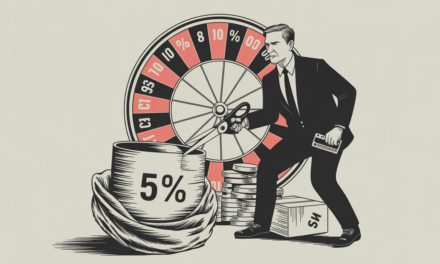

The largest penalty in Dutch gambling regulator history may never be collected. Yesterday, the Netherlands’ Kansspelautoriteit (KSA) hit Curaçao-based Novatech Solutions NV with a €25 million fine – the biggest it has ever issued. Hours later, the company’s chamber registration was discontinued and the entity dissolved.
Welcome to what looks like the Curaçao playbook: fine first, disappear second.
A Masterclass in Regulatory Evasion – Or Just Business as Usual?
Whatever the intention behind it, the sequence sends an unfortunate message to every regulator in Europe: catch us if you can.
While the KSA presented the decision as a landmark enforcement action against illegal online gambling, its target ceased to exist as a legal entity. Same day. Same registry. And, as far as we can tell, no sign that a single euro has been paid.
We do not think this is a one-off glitch. In our view, it is what the system allows by design.
Behind the Curtain: The Corporate Service Provider Layer
Novatech was managed through Downtown E-Commerce Company BV (DECC), a Curaçao corporate service provider.
That is entirely standard on the island: most Curaçao-licensed operators are administered by a local CSP that supplies directors, a registered address and corporate housekeeping. Nothing in the public record shows that DECC or its directors did anything unlawful, and we are not suggesting otherwise.
The question is a structural one. When the entity that holds the licence can be wound up within hours of a record fine, who is left for a foreign regulator to pursue?
Curaçao Gaming Authority & CSPs: Oversight or Rubber Stamp?
Let’s be direct about how this looks from the outside.
For years, critics – including Dutch lawmakers – have argued that Curaçao’s licensing regime collected fees while exercising little real oversight over where its licensees took bets. The island has since reformed its framework under the LOK, and the Curaçao Gaming Authority (CGA) says the old days are over. Cases like this one are the test of that claim.
Because when a fine lands, the options available to a licensee remain strikingly convenient: dissolve the company, strike it from the chamber, and, if the business is worth keeping, set it up again under another flag – Belize, Anjouan, or whichever jurisdiction currently offers the lightest-touch licence.
The pattern the industry has seen before
- Dutch regulator identifies an unlicensed operator
- Curaçao entity receives a large fine
- Entity is dissolved before the fine can be enforced
- Brand reappears under a new licence elsewhere
- Repeat
If that pattern holds here, it is fair to ask what a fine is worth when the corporate infrastructure makes it so easy to walk away from.
Root Cause, Not Surface Fix: The Offshore Model Is the Problem
This isn’t about one company. It’s structural.
Curaçao’s legacy sub-licence system – long criticised in the Netherlands – was not built for close supervision. It was built for volume: many operators, few checks, and compliance in foreign markets treated as someone else’s problem.
In that model, CSPs provide the corporate wrapper, the regulator historically collected the fees, and dissolution is a cheap exit for any operator facing liability abroad.
The KSA can keep fining entities that no longer exist, but until cross-border enforcement has teeth – director liability, cooperation between regulators, pressure on payment and platform suppliers – we expect little to change.
Players lose their protection. A publicly funded regulator spends resources on decisions it cannot enforce. And the commercial upside stays offshore.
What Happens Next
It would surprise no one in the industry if the brands Novatech operated resurfaced under a new entity and a new licence. If they do, the games, the promotions and the exposure of Dutch players will be the same. Only the corporate wrapper will have changed.
In our view, a regime in which a licensee can vanish on the day it is fined isn’t regulating iGaming in any meaningful sense. It is lending it a letterhead.
The €25 million fine wasn’t just left unpaid – it was made to look irrelevant. Unless the Netherlands and the EU find a way to make such penalties stick, and unless Curaçao shows that its reformed regime closes this exit, yesterday’s episode will be tomorrow’s headline again.
Only the names will change.