
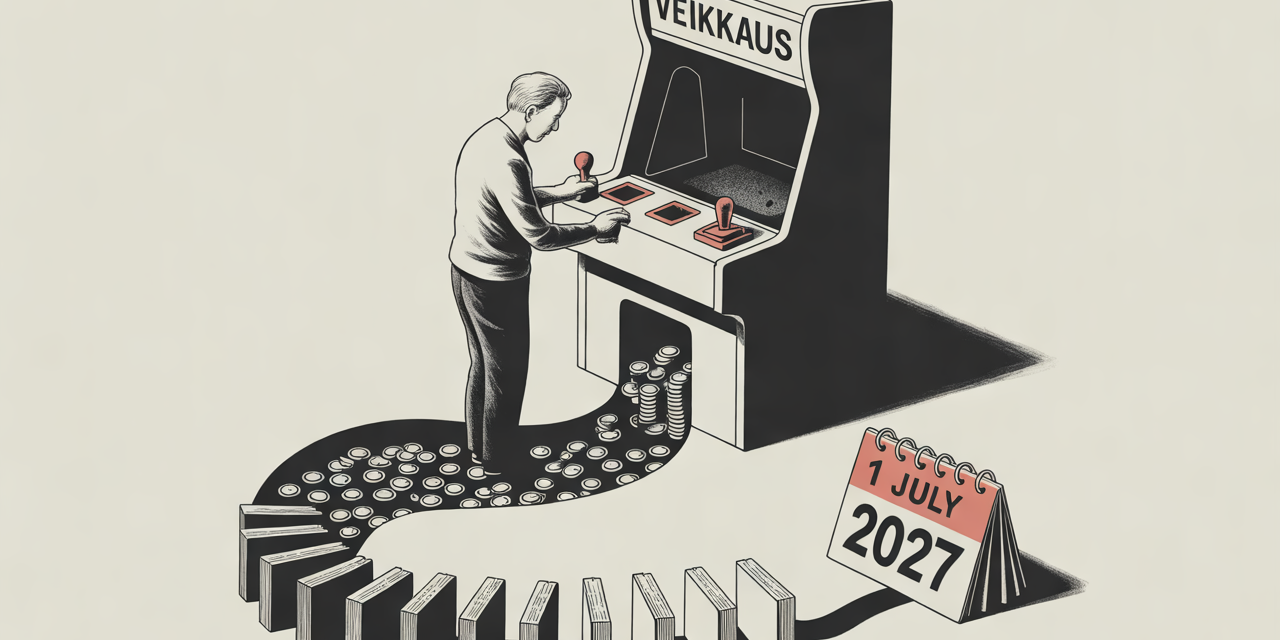
Finland has approved its first 12 online gambling licences from 79 applications. None can be used before 1 July 2027. The approvals are not a market launch; they are an admission that Veikkaus could no longer keep players inside the state system.
Veikkaus’s gross gambling revenue fell from €1.8bn in 2017 to €931m in 2025. Channelisation — the share of gambling through the official system — dropped from roughly 90% a decade ago to about 50% today. Deputy CEO Velipekka Nummikoski estimates that €600m to €900m is now played outside that system each year.
Twelve approvals, no market yet
As of 26 October 2026, Finland’s National Police Board had approved 12 of the 79 applications submitted since the window opened on 1 March. None had been refused; about 67 remained in process. The queue grew from around 50 in June to 75 in late September and 79 now. That shows demand to enter, not a settled competitive field.
The first licence holders are Hippos ATG Oy, Sunflower Gaming Limited, Granturo Finland Ltd, Skill On Net Ltd, SuomiVeto Oy, Cloudberry Ent Limited, SixthSpin Limited, KuuFlip Limited, RocketLily Ent Limited, Nivei Ursi Limited, YTBlue Limited and Buccone Trading Limited. Granturo Finland is part of Wildz Group. The regulator has named corporate entities, not consumer-facing brands; several are Malta-registered companies, and their Finnish brands have not been announced.
Calling 12 of 79 a 15% approval rate would be wrong: the other applications are still being processed. And approval is not permission to take bets. The application fee is €29,000, non-refundable, and substantive review starts only after it is paid. The National Police Board targets three to six months for each review. Applicants are paying now to enter a market that remains eight months from opening; the first list reflects who is willing to fund the process, not who will win customers.
A timed opening, with the incumbent still in play
Parliament passed the Gambling Act by 158 votes to nine in December 2025; it was signed in January 2026. From 1 July 2027, private operators can compete in online betting, online casino, online slots, virtual betting and online bingo. Licences can run for up to five years and are renewable.
The launch is only the first deadline. From 1 July 2028, licensees may use only gambling software supplied by licensed B2B providers. Operators that leave supplier compliance until after launch will have little time to fix it. The National Police Board is handling applications for now, but the new Finnish Supervisory Agency, Lupa- ja valvontavirasto, takes over licensing and supervision on 1 July 2027 — the day the market opens. It will inherit a live market on its first day.
Veikkaus has applied for an online licence but is not among the first 12 approvals. It keeps exclusive rights to lotteries, scratch cards, land-based slot machines and casino games. This is an online opening, not the dismantling of the state operator. Veikkaus is also preparing a Viabet brand in Finland and Denmark with Viaplay from July 2027. New entrants may face no entrenched private rival, but they will face a familiar local incumbent with exclusive products and an established brand.
The economics could keep players offshore
H2 Gambling Capital estimates Finnish gross gambling revenue at €1.9bn in 2026, with about 81% online. Around 70% of the population gambles in some form. That is enough to attract international operators, but market size does not guarantee easy profit. From 2027, operators will pay 22% of gross gambling revenue in tax, plus an annual supervision fee of €4,000 to €434,000, scaled to revenue. Licensed firms carry those costs whether or not they can persuade customers to switch.
Marketing is permitted only on a limited basis. That may reduce exposure to gambling, but it also restricts how new licensees can reach customers already using offshore sites. The trade-off is blunt: Finland wants a controlled market, but regulated operators need room to make their offer known if they are expected to pull play back inside it.
Enforcement is the larger problem. The new regime has no comprehensive payment-blocking system for unlicensed operators. The Ministry of the Interior’s 90% channelisation target is wishful thinking unless other measures prove far more effective than the record so far. Offshore sites can keep taking deposits and paying withdrawals while licensed businesses face tax, supervision fees and restricted marketing. Without a way to disrupt those payment routes, the state risks charging the legal market more while leaving its unlicensed competitors easier to use.
Protection rules will not pull users back alone
The system requires all operators to connect to a national self-exclusion register. Players must set deposit limits before their first play; operators must verify identity, and gambling is restricted to people aged 18 and over. Those are real safeguards, not decoration.
But safeguards and channelisation do different jobs. The register can stop an excluded player opening an account with a licensed operator; it cannot, by itself, stop that person using an unlicensed one. Identity checks and deposit limits can make regulated gambling safer without making it more attractive. If the state enforces the rules only inside the licensed perimeter, the firms that comply bear the cost while offshore sites retain an open route to customers.
Finland’s next test begins before launch
Finland is the last genuine state monopoly in the EU to open online gambling to private competition, though Veikkaus keeps key lottery and land-based products. The shift recognises that monopoly control had failed to keep most play inside the official system. A new licence register alone will not reverse that.
Before 1 July 2027, the state must show how its marketing limits let licensed firms compete and how it will make unlicensed play harder to reach. It also needs a clean handover to the new supervisory agency on opening day. The 2028 supplier deadline adds another compliance test just a year later. If Finland cannot answer those questions, the first 12 licences will mark the start of a regulated market that still loses customers to the one it was built to replace.