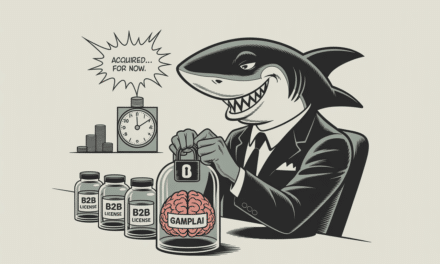

Gaming is the headline; control of the room is the deal. Informa’s £2.24bn purchase of Clarion puts ICE Barcelona and iGB L!VE under the same corporate roof as IFA Berlin and DSEI. The industry’s most important annual shop window will now sit inside a generalist events machine: a buyer with reach and bargaining power, and a test of whether scale can pay without sanding off the specialist identity that made these shows valuable.
A £2.24bn price for a portfolio built on attention
Announced on 6 October 2026, the acquisition is expected to close in Q4, subject to regulatory clearances. Founded in 1947, Clarion employs around 2,000 people across 12 countries. Its portfolio spans more than 125 event and media brands, including over 100 B2B live-event brands. Its WorldGaming arm runs ICE Barcelona and iGB L!VE/iGB Affiliate, the gatherings where much of the global gambling industry does its annual networking, deal-making and public performance of confidence.
Clarion is projected to generate £575m ($759m) of revenue in 2027 at an adjusted operating margin above 30%. Informa is paying an enterprise value equal to 11.1 times Clarion’s expected 2027 EBITDA. That falls to roughly 9 times after £50m of expected cost synergies, and about 8 times if £25m of revenue synergies arrive by 2029. The arithmetic improves only if management gets both integration and growth right. Those lower multiples are forecasts with conditions attached, not a discount coupon.
For Blackstone, which bought Clarion in 2017 for £600m (about $800m), this is a strong exit. For Informa, it is a sizeable bet that Clarion’s events can keep their pull inside a much larger operator. The price says the buyer sees durable value in brands that command a room—and in the network around them—not merely a collection of dates on a calendar. Blackstone gets to bank that value now; Informa has to prove it can preserve it after the handover.
The deal math depends on more than cost-cutting
Informa’s funding package combines committed acquisition financing with a £940m ($1.24bn) equity placing, equivalent to about 9% of issued share capital, plus a retail offer. It is pausing its share buyback to help fund the purchase. Pro forma net debt is expected to remain below 3 times EBITDA at the end of 2026 and below 2.5 times by the end of 2027. Informa forecasts mid-single-digit EPS accretion in 2027 and double-digit return on invested capital within three years.
Those targets give investors a timetable and put the burden squarely on execution. Cost savings are the cleaner part of the case; revenue synergies ask exhibitors and attendees to find enough value in Informa’s wider offer to change what they buy. That is harder than merging back-office lines. Cut too aggressively and Informa risks weakening the specialist teams and customer relationships that make an event worth attending. Leave everything untouched and the synergy arithmetic starts to look like a spreadsheet with excellent self-esteem. If customers see no added value, they will not pay extra just because the parent company has a larger catalogue.
The wider corporate reshuffle matters too. Informa is separating academic publisher Taylor & Francis, which is approaching $1bn in revenue and growing at 4%. The outcome is expected alongside FY2026 results in March 2027. Informa is redrawing its own boundaries while adding Clarion: less tied to academic publishing, more concentrated on live events and related services. After the deal, its B2B live-events business is expected to exceed £4.2bn in revenue; the group would top $6bn, with around 1,000 brands and 7% underlying growth. That scale gives Informa more ways to sell across its portfolio, but it also makes the company’s live-events thesis harder to hide behind other divisions.
One owner, more bargaining power – and more responsibility
The structural change is bigger than the gaming portfolio. Informa already operates IFA Berlin and DSEI; adding Clarion puts those shows and ICE under one owner. That gives Informa control over a wider set of major event brands, exhibitors and destination choices than any single operator has had in the industry before. It should strengthen its hand with venues and host destinations. Informa may turn some of that bargaining power into better economics; venues and destinations will be negotiating with a larger counterparty, while exhibitors and attendees will judge whether the shows themselves get better or simply more profitable for their owner.
Events are a self-reinforcing two-sided market: exhibitors attend because buyers show up, and buyers come because the exhibitors matter. Once a show becomes the place where everyone expects everyone else to be, moving it is costly in ways that do not appear on a venue invoice. That network effect helps explain the premium Informa is paying. It also makes control of the platform consequential: a poorly judged change to format, location or customer experience can damage trust across both sides of the market, not merely disappoint one sponsor.
Scale can also blur the distinctions that made each event valuable. ICE is a gaming trade show, not a generic conference with slot machines in the corner. A generalist parent can provide capital, global reach and negotiating clout; it cannot assume expertise and community are interchangeable across sectors. Informa needs to protect each show’s specialist identity while coordinating them where the economics genuinely improve. Consolidation creates options. It does not automatically create better events, and customers will notice quickly if the savings come at the expense of the reason they show up.
ICE Barcelona becomes the first visible test
Clarion CEO Lisa Hannant will stay and join Informa’s executive leadership team, a useful signal that the buyer is not treating the acquired business as a pile of logos awaiting integration. Informa CEO Stephen A. Carter now has to make the portfolio logic real without making customers feel that a distant corporate centre is redesigning their industry’s meeting place for its own convenience. Retaining leadership may help protect continuity; it does not spare the new owner from proving that it understands the audience.
The next ICE Barcelona runs from 18–20 January 2027. If the acquisition closes as expected, the show will give the market an early chance to judge whether the change in ownership is mostly invisible or whether a new parent begins to shape its priorities. The stakes extend beyond one January event: control of the annual meeting point influences where suppliers invest, where buyers travel and which destinations compete for the industry’s attention.
Informa is buying more than profitable event brands. It is buying a position inside the industry’s operating system: the recurring place where relationships form and commercial decisions gather momentum. The deal could make that system more efficient and give the shows greater reach. It could also concentrate power in a company whose incentives span industries far beyond gambling. The real test lies ahead: whether ICE and iGB remain indispensable to their audiences after the new owner starts using the scale it paid £2.24bn to acquire.