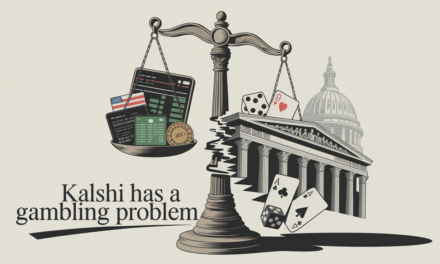
Three simultaneous state-level actions in the span of weeks have drawn a new, tighter perimeter around the American gambling market. Operators who built growth strategies on regulatory ambiguity are about to get an expensive lesson in political science.
Colorado’s Deposit Cap Is a Public Indictment of the Industry’s Own Promises
Colorado passed Senate Bill 131 with a 20-15 Senate vote and a dominant 50-13 House vote. The headline provisions: six deposit limits per day, a ban on credit card deposits, and restricted advertising windows. Enhanced penalties for operators targeting under-21 bettors were folded in — presumably because the industry needed legislative encouragement to stop doing something it shouldn’t have been doing in the first place.
The context matters. Colorado legalized sports betting in 2019. Since then, the market has ballooned from $1 billion to over $6 billion in annual wagers. That’s not organic growth — that’s the result of aggressive acquisition funnels, promotional credit stuffing, and advertising saturation. Legislators looked at that trajectory and decided the word “predatory” applied. They’re not wrong.
The bill did strip out two provisions that had the industry sweating — restrictions on player prop bets and specific peak-hour advertising bans. Operators got a partial reprieve. Reading that as a win, however, is a severe misunderstanding of how legislative momentum works. You don’t get a bill this close to including prop bet restrictions in a state that legalized five years ago without the next session pushing harder. The 2025 bill is the floor, not the ceiling.
The six-deposits-per-day cap deserves the sharpest analytical attention. It’s a blunt instrument, and everyone in the industry knows it. Blunt instruments are exactly what legislators reach for when they believe the industry can’t be trusted to police its own acquisition practices. Operators spent years arguing that responsible gambling tools were adequate. Colorado’s legislature just called that bluff publicly — and on the record.
Oklahoma’s Legislature Overruled Its Own Governor. That Should Tell You Everything.
In Oklahoma, the sweepstakes ban isn’t just about sweepstakes. It’s about the political arithmetic of tribal gaming compacts, legislative loyalty, and what happens when a governor stands between a legislature and its most powerful constituents.
Governor Kevin Stitt vetoed Senate Bill 1589. The Legislature overrode it 34-10 in the Senate and 68-19 in the House. Those margins aren’t close calls — they’re statements. The argument that SB 1589 would criminalize legitimate apps and impose disproportionate penalties didn’t move enough legislators to matter. The tribes wanted this, and the tribes got it.
Sweepstakes operators built their entire model on a legal gray zone: dual-currency systems, promotional framing, casino-style mechanics. The argument was always that they weren’t “really” gambling. Oklahoma’s legislature, with overwhelming bipartisan support, has formally rejected that framing. The loophole is closed. Operators who saw Oklahoma as an addressable market need a new talking point, because the “it’s just a promotion” defense is running out of states willing to accept it.
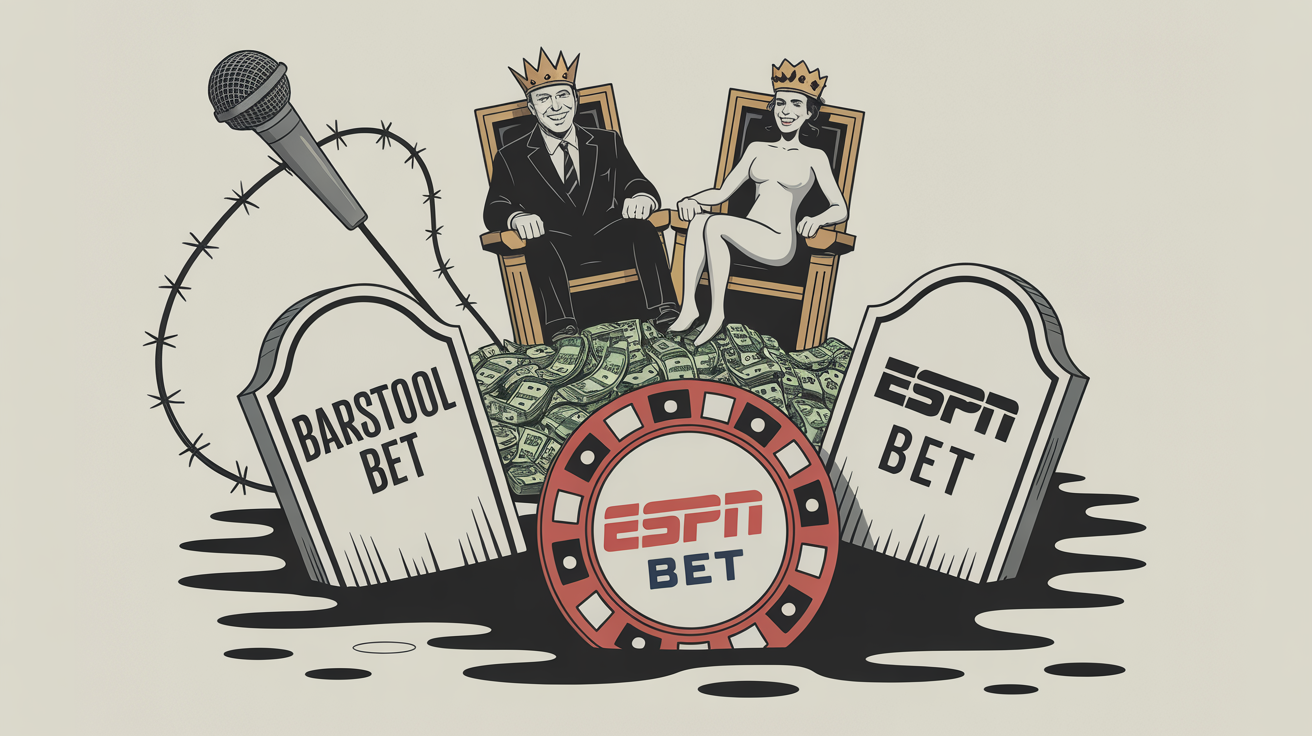
The downstream implication is direct: tribal gaming stakeholders have demonstrated they have both the political will and the legislative relationships to shut down operators they view as competitive threats. They did it in Oklahoma. That playbook will get copied in other compact states — count on it.
The AGA Has Declared War on Prediction Markets, and the Tribes Are Already in Cour
If you needed a signal that 2026 is going to be rough for prediction market operators, AGA CEO Bill Miller provided one with unusual directness. After claiming credit for halting sweepstakes expansion in major markets, he put prediction markets on the hit list explicitly. The message: sweepstakes were stopped, prediction markets are next.
This isn’t trade association posturing. The AGA represents an industry that generated $78.6 billion in gross commercial gaming revenue in 2024 — a 9% year-over-year increase. iGaming alone grew 27%, led by Pennsylvania, Michigan, and New Jersey. When an industry generating an estimated $125 billion in total revenue, including tribal contributions, and $18 billion in tax receipts tells regulators that a competitor is undermining its framework, legislators listen. They always listen to the constituency writing the tax checks.
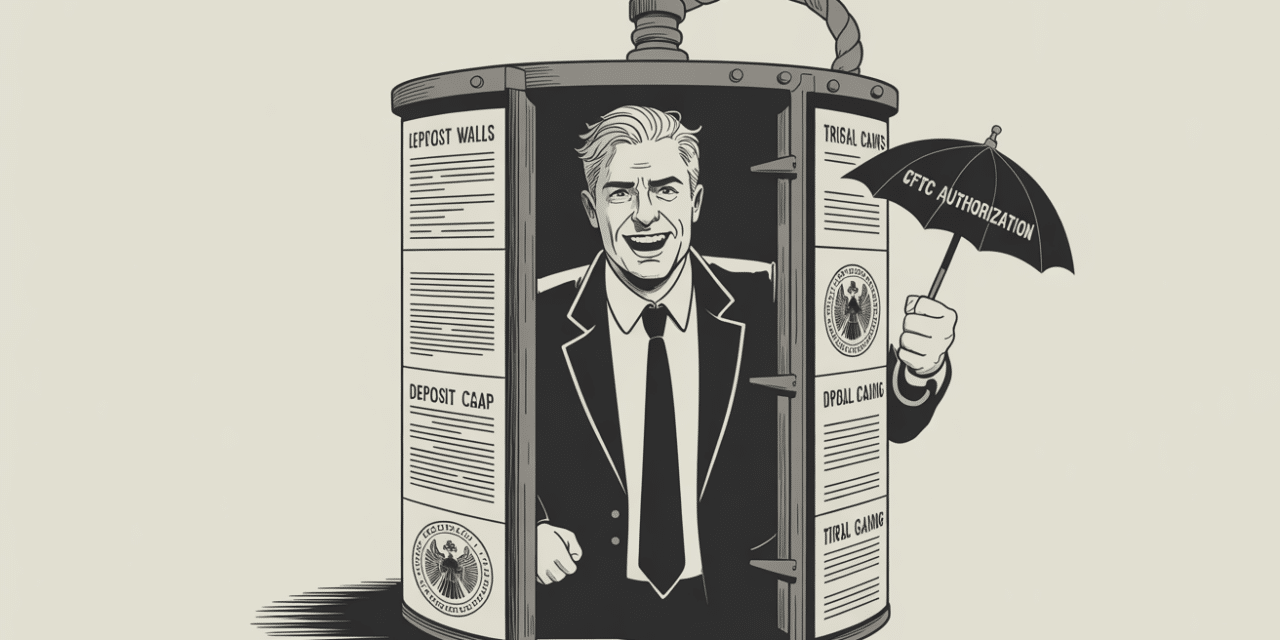
The legal pressure is already materializing. New Mexico tribes have filed suit against Kalshi over sports event contracts. Minnesota passed an event contracts ban heading to the governor. The coordinated nature of these actions — legislative, judicial, and trade association pressure hitting simultaneously — is not coincidental. This is an organized campaign, and prediction market operators who thought CFTC authorization gave them a durable shield are discovering that state-level sovereignty doesn’t care about federal agency sign-off.
Kalshi and its competitors entered sports event contracts as a product expansion framed around financial instruments rather than sports betting. That distinction has always been politically fragile. When tribes and established operators can point to identical consumer outcomes — money risked on sports results — and ask why one is taxed and regulated while the other isn’t, the regulatory arbitrage argument collapses under its own weight. The CFTC authorization was never a guarantee; it was a starting position in a much longer fight.
What Operators Actually Need to Do Right Now
This is not a moment for incremental roadmap adjustments. The regulatory perimeter has moved materially, and it is moving in one direction.
Acquisition strategies built on credit card deposit funnels in Colorado need to be rebuilt from scratch — not reviewed, rebuilt. Any product team still treating sweepstakes as a viable market entry mechanism for compact states is behind the curve by at least one legislative cycle. Prediction market operators need legal strategies that account for state preemption, not just federal positioning, because federal positioning clearly isn’t enough.
The broader pattern is unmistakable: states that legalized quickly are now passing second-generation legislation to correct what they see as market failures. Colorado is five years in and already legislating deposit caps. States that legalize in the next two years will probably build those restrictions into the initial framework — there are enough cautionary examples now that new-market legislators will pre-empt rather than remediate.
The American gaming market is maturing, and maturation in regulated industries always looks the same — gray zones shrink, operators who built margin on ambiguity watch that margin disappear, and compliance stops being a cost center and starts being a competitive differentiator. The only question is whether your compliance and government affairs teams are ahead of that curve or reacting to it. Based on this week’s news cycle, a lot of teams are still reacting — and they’re reacting to decisions that were telegraphed months ago.