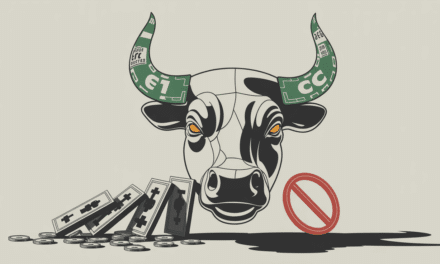
Lottomatica’s €2.8bn all-share merger with Cirsa redraws Europe’s listed gaming hierarchy in one transaction. It also hands Lottomatica investors the standard merger bargain: absorb the premium, the integration risk and a more complicated asset base now, then wait to see whether the synergy slide survives reality. Their initial verdict was unsentimental, with Lottomatica shares falling roughly 9.6% to 10% on the announcement while Cirsa shares rose about 17%.
A 21% premium buys scale, complexity and a bigger burden of proof
On 2 September 2026, Lottomatica and Cirsa signed a binding all-share agreement under which Cirsa shareholders will receive 0.668 Lottomatica shares for each Cirsa share. That values Cirsa at €16.55 per share, a roughly 21% premium. Target investors received the clean part of the proposition: an immediate uplift in the value assigned to their company. Lottomatica investors received dilution and the job of making the arithmetic work.
The companies expect the combined group to become the world’s second-largest listed gaming and sports betting operator, behind Flutter, with pro forma adjusted EBITDA of around €2bn. Management has identified about €115m in annual pre-tax synergies and proposed up to €4bn in dividends and buybacks during the three years after closing, which is expected in Q2 2027 subject to regulatory and shareholder approvals.
Those figures are not a justification by themselves; they are a very public operating test. A 21% premium, €115m of annual savings and up to €4bn of distributions leave little room for routine execution. The combined group must integrate, invest and satisfy regulators while returning large amounts of cash. Management says all three can coexist. Investors are entitled to ask which priority gives way if results disappoint.
The diversification pitch still rests on Italy and Spain
Lottomatica is Italy’s heavyweight across online gaming, sports betting, retail gaming and gaming machines. Cirsa brings a materially different operating profile, led by casinos, with land-based venues and Latin American casino assets alongside a major Spanish presence. On paper, the combination adds countries, verticals and customer types. In practice, it combines a dominant Italian platform with a casino-led Spanish and Latin American business that must find a common strategy.
The pro forma EBITDA mix is the antidote to the corporate-deck version of diversification: 57% will come from Italy and 23% from Spain. Roughly four-fifths of earnings therefore remains tied to two mature European regulated markets. More flags on an investor presentation do not erase exposure to tax policy, advertising restrictions, licensing conditions or shifting political sentiment in the markets that still pay the bills.
That makes integration more consequential than headline scale. This is not Lottomatica purchasing a clean new growth engine. It is taking on casino exposure, Latin American assets and a second major European operating centre, then trying to turn distinct regulatory relationships, technology demands and capital needs into one listed-company strategy. Rome will be the headquarters and Barcelona the secondary headquarters; the organisational chart is the easy part.
€115m of synergies is plausible; the capital-return promise is harder
A group with around €2bn in pro forma adjusted EBITDA gains real advantages. It has greater capacity to fund technology, product, compliance, marketing and market access, while spreading fixed regulatory and technology costs across a broader revenue base. In a European gaming sector where rules vary by market and compliance costs keep rising, scale is not decorative. Flutter remains the listed giant to beat, but this combination will command attention from competitors, suppliers and acquisition targets.
The €115m annual pre-tax synergy target deserves scrutiny rather than automatic disbelief. Savings from duplicate corporate functions, procurement and technology consolidation are credible. They are also disruptive, politically awkward and rarely as frictionless as merger models imply. Cross-selling is the more dangerous assumption: casino customers, online sportsbook users, retail machine players and Italian regulated-gaming consumers do not become a single addressable pool because finance teams have combined their spreadsheets.
The proposed €4bn of dividends and buybacks sharpens the contradiction. Returning that sum over three years after closing may signal capital discipline, but it also reduces tolerance for integration overruns, regulatory pressure or weaker trading. A regulated balance sheet cannot be treated as a cash dispenser simply because a deal presentation needs a closing flourish. If the group must choose between resilience, growth investment and advertised payouts, the real capital-allocation philosophy will become clear quickly.
Blackstone’s 24% holding turns ownership into the real governance issue
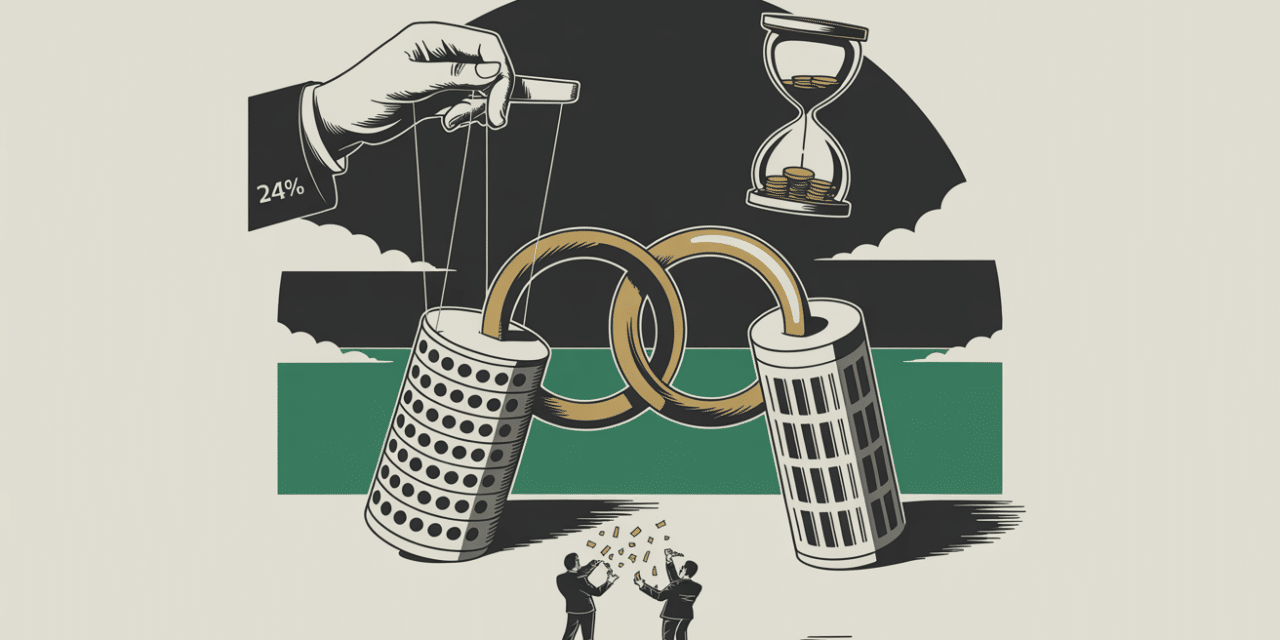
Lottomatica shareholders will own about 67.5% of the combined company. Blackstone, Cirsa’s majority owner, will hold roughly 24%, making it the largest single shareholder. That stake is the governance story beneath the transaction mechanics. It gives Blackstone meaningful influence over strategic direction, capital allocation and boardroom dynamics, even without control of the company.
A powerful sponsor can impose useful discipline on an enlarged management team tempted by empire-building. The same sponsor has a clear incentive to realise value through dividends, buybacks, a future sell-down or some combination of the three. That incentive can conflict with the spending needed to integrate systems, improve online product and strengthen resilience in heavily regulated markets. Private equity is not a charitable endowment, and a 24% holding is not passive wallpaper.
The merger resolves Cirsa’s ownership structure today but creates a future supply-of-stock question in the combined entity. Blackstone cannot remain a 24% shareholder indefinitely without investors asking when, how and at what price it will reduce exposure. Lottomatica investors are therefore assessing both operating execution and the prospect of a major shareholder eventually seeking an exit.
Suppliers, affiliates and subscale operators now face a tougher buyer
Suppliers should expect a buyer with greater negotiating power, and procurement savings are among the most dependable sources of synergy money. Smaller vendors are unlikely to receive sentimental treatment. Affiliates face a mixed outcome: a larger group can centralise acquisition strategy, tighten compliance standards and reduce reliance on external traffic. Large, compliant publishers with multi-market reach may benefit because scale tends to reward scale all the way down the chain.
For mid-tier operators, the deal makes the cost of remaining subscale harder to ignore. Compliance, technology and customer acquisition remain expensive, while regulators are not becoming easier to manage. That does not mean every board should rush into a transaction; gaming has enough expensive integration failures already. It does mean single-market operators look less like permanent independent champions and more like potential acquisition candidates.
The transaction’s verdict will arrive after the expected Q2 2027 close, assuming approvals are secured. The question is whether Rome and Barcelona can run one coherent group, whether €115m of synergies survives contact with operations, whether €4bn of capital returns proves discipline rather than bait, and whether Blackstone’s 24% stake becomes a stabilising force or an exit countdown.