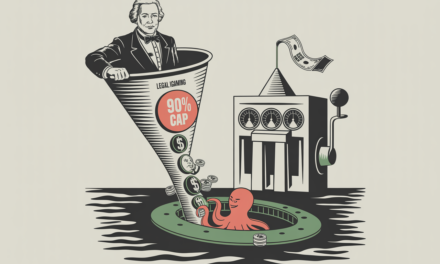

Open ten UK casino sites right now. You’ll find ten variations of the same wager-free offer, the same deposit-match ceiling hovering around £50, the same painfully polite terms and conditions. Six years ago that same exercise would have surfaced wild variance — 500% matches, no-wager free spins stacked on free spins, credit-fuelled deposits chasing whales who could barely afford the bus fare home. That variance is gone. Not diminished. Gone.
This isn’t operators losing their nerve or a coincidence of market maturity. It’s the entirely predictable output of a regulator that decided the bonus itself was the problem, then systematically dismantled every mechanism that made bonuses interesting.
What Actually Happened
Start with the credit card ban in 2020. That single rule removed an entire category of stake-fuelled bonus generosity because operators could no longer bankroll acquisition against money players didn’t actually have. Then came affordability checks, tightened repeatedly since, which made it commercially reckless to lure high-value depositors with size-of-bonus alone — the same players triggering the biggest promotional spend were the ones most likely to get flagged, checked, and frozen mid-journey. Then winnings caps and wagering restrictions arrived, stripping out the mechanics that let operators dress up a mediocre offer as a generous one through clever multiplier structures.
Each change was defensible in isolation. Consumer protection advocates will tell you, correctly, that stake-chasing bonus structures preyed on vulnerable players. But the cumulative effect wasn’t just safer bonuses — it was the near-total collapse of the bonus as a differentiation tool. When every operator is boxed into roughly the same maximum offer size, the same wagering simplicity, and the same affordability triggers, you don’t get safer competition. You get identical competition. Industry analysts have started calling this convergence a form of regulatory homogenisation — a polite way of saying nobody’s allowed to compete on the thing that used to make them competitive.
The Compliance Arms Race Nobody Wanted
Here’s what actually happens when regulation flattens the promotional layer: operators stop competing on bonus generosity and start competing on compliance efficiency instead. That sounds fine until you realise what it means in practice. The winners in this environment aren’t the operators with the sharpest marketing teams or the most creative product people. They’re the ones with the best affordability-check algorithms, the fastest KYC pipelines, and the deepest legal budgets to interpret ambiguous guidance before their competitors do.
That’s a structural advantage that flows straight to the biggest operators. Flutter, Entain, and the other listed giants can absorb compliance cost as a rounding error against nine-figure revenue. A mid-tier operator trying to differentiate on customer experience is now spending the same proportional resource fighting the same regulatory battle with a fraction of the capital. The bonus flattening didn’t just remove a marketing lever — it quietly rewrote the competitive hierarchy of the entire market in favour of scale.
Where The Money Actually Went
Bonus budgets didn’t disappear. They moved. Watch where UK operators are actually spending now and you’ll find it’s shifted almost entirely into loyalty mechanics, VIP hosting, and product experience — the things regulation hasn’t fully mapped yet. Cashback structures that dodge classic wagering-requirement scrutiny. Tiered loyalty schemes dressed up as