Prediction markets just bought themselves a seat at the grown-ups’ table — and they didn’t ask for permission first. Within the same news cycle, Kalshi planted its flag on the sixth floor of Madison Square Garden and Polymarket locked down a US partnership with Serie A. If you still think prediction markets are a niche corner of the internet where political junkies bet on election outcomes, you’re roughly three years behind reality.
The Deals, Stripped of PR Gloss
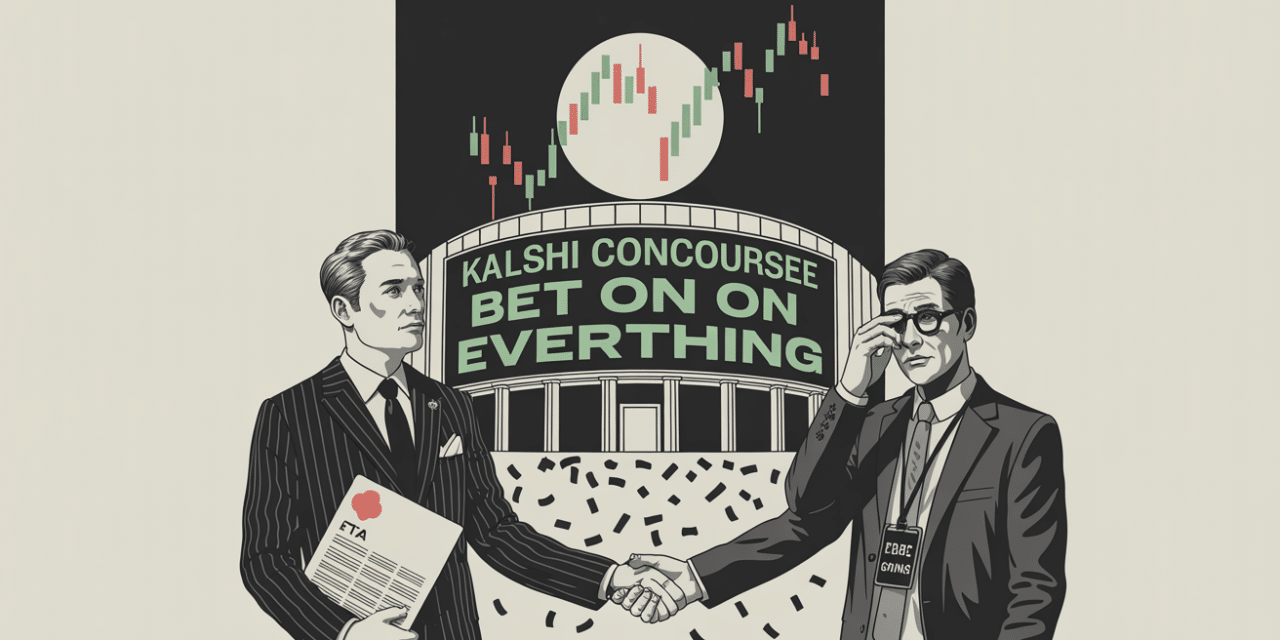
Kalshi’s arrangement with MSG isn’t a logo slapped on a wall. The sixth-floor concourse gets rebranded the ‘Kalshi Concourse,’ with interactive digital activations threaded throughout the venue. Starting May 8, 2026, anyone walking into the World’s Most Famous Arena to watch the Knicks, the Rangers, or a Billie Eilish concert will encounter Kalshi’s branding before they find their seat. MSG Networks advertising folds in too, extending reach well beyond the physical building. This is full-spectrum brand integration, not a hospitality tent deal.
Polymarket’s Serie A agreement is structurally different but tactically aligned. It positions Polymarket as the exclusive prediction market partner for Serie A in the US, built on official Serie A data. This follows Polymarket’s prior agreement with LALIGA North America — a pattern that reveals the actual strategy: methodically acquiring official data rights and association with prestigious European football properties precisely as American interest in the sport accelerates. The MLS boom, the NWSL’s rise, the 2026 World Cup on home soil. Polymarket is surfing a wave that’s still building.
Why Sports, Why Now
The cynical read is simple: prediction markets need legitimacy, and sports sponsorship is the fastest retail legitimacy machine ever invented. When your brand appears courtside at MSG or on Serie A broadcast graphics, you borrow institutional credibility that would otherwise take a decade to build organically. Kalshi has processed $52 billion in event contracts since its 2018 founding. Polymarket has been the dominant venue for real-money event markets globally. Both platforms are operationally mature. What they lack — and what these deals directly address — is mainstream consumer recognition and the implicit trust that elite sports association delivers.
There’s a deeper structural reason prediction markets are moving into sports sponsorship right now. Traditional sportsbooks spent five years educating American consumers about odds-based wagering through an unprecedented advertising blitz. DraftKings, FanDuel, BetMGM, and their peers collectively burned hundreds of millions of dollars training the public to think about sports probabilistically. Prediction markets are now the beneficiaries of that education campaign without having paid a cent for it. The cognitive leap from “I’ll bet the Knicks minus four” to “I’ll buy a contract on whether the Knicks win tonight” is dramatically smaller than it was in 2019. Sports sponsorship is how prediction platforms announce they belong in the same conversation.
The engagement profiles also differ from sportsbooks in ways that make sports partnerships particularly logical. Traditional sports wagering is transactional — pick, wait, win or lose. Prediction market contracts trade continuously, with prices moving in real time as conditions evolve. That creates an engagement layer more compatible with how modern sports audiences actually consume content: constantly, on second screens, in short bursts of attention. A Kalshi market on whether a specific player scores in the second period, with a live contract price visible on the Kalshi Concourse digital boards, is a different product category entirely from a moneyline bet placed three days before the game.
The Regulatory Elephant That Refuses to Leave
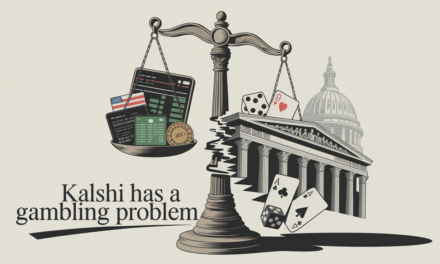
Here’s the brutal honesty. Kalshi is simultaneously signing venue naming rights deals and fighting tribal gaming lawsuits in New Mexico. The company operates as a CFTC-regulated exchange, which is the regulatory hook it uses to argue its event contracts are commodity instruments rather than gambling products. That distinction matters enormously — it’s the entire legal architecture underpinning Kalshi’s ability to operate in states where sportsbook licensing would otherwise be required.
The tribal operators aren’t buying it, and their legal challenges aren’t frivolous. They represent an existential regulatory question that a concourse naming deal at MSG does nothing to resolve. Aggressive commercial expansion while litigation is ongoing creates a peculiar optics problem: you’re building brand equity on top of a foundation that courts haven’t fully validated. Polymarket, operating primarily with non-US users on its core platform, carries its own regulatory complexity in a different register.
These sports partnerships don’t solve the regulatory problem. They’re a bet — appropriate for a prediction market company — that consumer entrenchment and institutional association will create political and market conditions that make the regulatory problem harder to act on. It’s the same playbook daily fantasy sports ran a decade ago, with mixed results. FanDuel and DraftKings ultimately pivoted toward full gambling licenses anyway. Whether prediction markets follow a similar arc, or whether the CFTC framework holds, is the actual story that will define this sector over the next three years.
What the Industry Should Actually Be Watching
For everyone else in iGaming, these deals are a signal worth processing carefully. Prediction markets are no longer a curiosity or a competitive footnote. They are actively acquiring the same brand real estate — venue naming, league data partnerships, broadcast integration — that sportsbooks spent years and enormous capital securing.
The user acquisition economics look different too. Sportsbooks compete in a brutal environment with customer acquisition costs that make venture capitalists wince. Prediction markets, with lower friction onboarding in some jurisdictions and a product that self-differentiates from conventional betting, could carve out a meaningful segment of sports-engaged users who are interested in market dynamics but put off by traditional gambling framing. The MSG deal targets exactly the high-income, culturally engaged urban consumer that every premium brand in America is currently fighting over.
Traditional sportsbook operators should resist the temptation to dismiss this as a regulatory house of cards waiting to collapse. The smarter response is to study the engagement model, watch the retention data if it ever surfaces publicly, and take seriously the possibility that continuous-trading event contracts represent a product evolution that betting-only platforms will eventually need to answer.
Kalshi and Polymarket have decided the path to mainstream acceptance runs through MSG and San Siro. Whether the courts and regulators let them complete that journey is an open contract — currently trading, one assumes, on both their platforms.