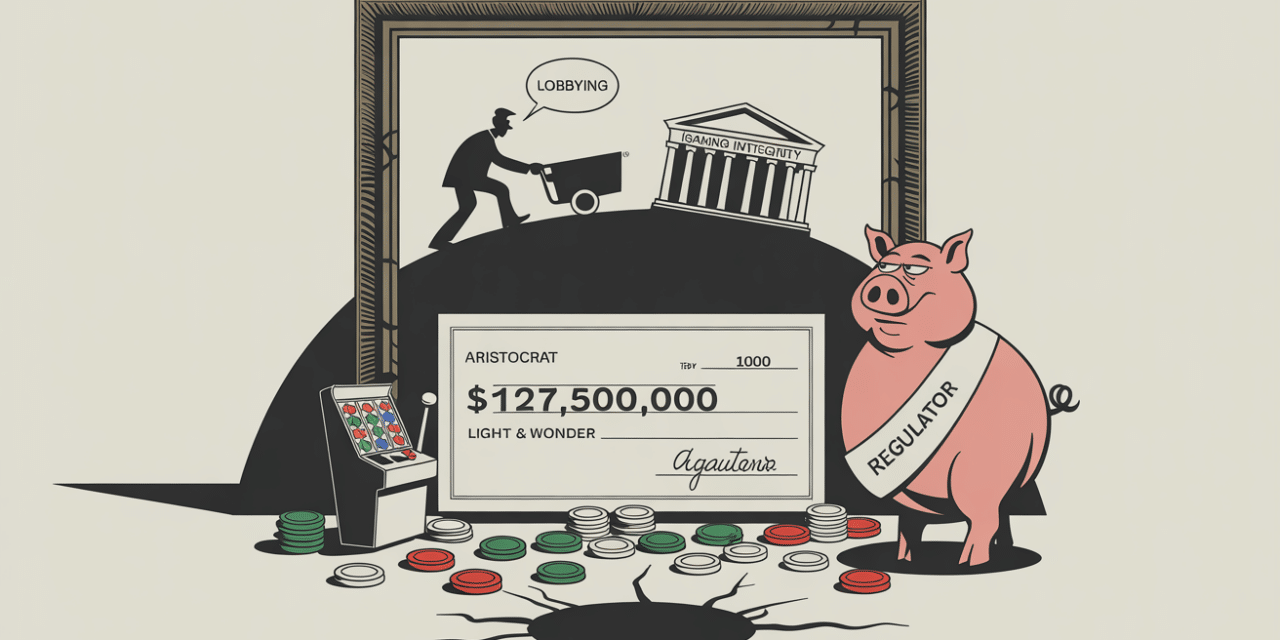
The iGaming industry has a penchant for “smoke and mirrors,” but even the most expensive PR machine can’t mask the stench of a $127.5 million settlement. Light & Wonder (L&W) didn’t just pay a fine; they paid for a burial. By settling with Aristocrat over the misappropriation of trade secrets related to Dragon Train and Jewel of the Dragon, L&W has effectively admitted that their “innovation” was nothing more than a high-stakes copy-paste job.
For the self-proclaimed guardians of the industry – the regulators – this isn’t just a corporate spat. It is a systemic failure that exposes the rot within regulatory capture and the hypocrisy of “market integrity.”
The Math of Malfeasance: Beyond a Simple IP Dispute
Let’s be brutally honest: in the world of slot development, the mathematical model is the soul of the machine. It is the proprietary DNA that dictates volatility, RTP (Return to Player), and ultimate profitability.
When L&W agreed to permanently cease commercialization of these titles and destroy documents containing Aristocrat’s math, they weren’t “resolving a misunderstanding.” They were surrendering after being caught red-handed. The court’s finding that Aristocrat was “extremely likely to succeed” in proving trade secret misappropriation is a polite judicial way of saying L&W bypassed years of R&D by poaching talent – specifically former Aristocrat designer Emma Charles – to strip-mine her previous employer’s intellectual property.
The Irony of the “Lobbying Shield”
While L&W’s legal team was scrambling to hide their math, their lobbying arm was busy patrolling the moral high ground. They’ve spent millions warning legislators about the “evils” of gray-market sweepstakes and illicit competition.
It takes a special kind of audacity to demand crackdowns on “unregulated” actors while simultaneously building your product roadmap on stolen blueprints. This isn’t just a double standard; it’s a strategic distraction designed to weaponize regulation against competitors while the weaponizer ignores the rules themselves.
The Great Escape: Delisting, ASX, and the Transparency Void
In a move that surprised no one paying attention to systemic risk, Light & Wonder completed its exit from the Nasdaq in November 2025, pivoting to a sole listing on the Australian Securities Exchange (ASX).
The official narrative? “Aligning with our shareholder base.” The reality? Oversight arbitrage.
By decoupling from the U.S. capital markets, L&W reduces its daily exposure to the rigorous scrutiny of American financial regulators and the relentless transparency requirements of Nasdaq. Moving to the ASX—where the company already holds a dominant cultural and economic footprint—is a tactical retreat into a more “comfortable” environment just as the legal and ethical consequences of their IP theft are reaching a boiling point.
Regulatory Capture: Are Policymakers Complicit?
The real scandal isn’t that a corporation acted with predatory intent—that’s just capitalism in the dark. The scandal is the silence of the regulators.
-
Selective Enforcement: Regulators have moved with “emergency” speed to address sweepstakes based on L&W’s narratives. Where is that same urgency regarding a supplier caught using stolen trade secrets?
-
Fitness and Propriety: In most jurisdictions, gaming licenses are contingent on “good character.” Does a $127.5M settlement for trade secret theft meet the threshold for a “suitable” operator?
-
Revenue Erosion: IP theft devalues the entire ecosystem. If the industry allows math-stripping to become a viable business model, R&D investment will crater, and state tax revenues will follow.
The Credibility Crisis of 2026
The Light & Wonder settlement is the “smoking gun” that proves the iGaming industry’s oversight system is currently broken. You cannot claim to protect the public and the market while allowing a major supplier to settle its way out of a systemic IP theft scandal.
If regulators do not pivot from being “partners” of the big-cap suppliers to being actual enforcers, they are not just incompetent—they are obsolete. Tightening oversight on supplier conduct is not an “anti-business” move; it is the only way to prevent the industry from cannibalizing itself.
Disclaimer: This article and its accompanying images may have been enhanced using AI tools to ensure smoother content delivery and visual appeal.