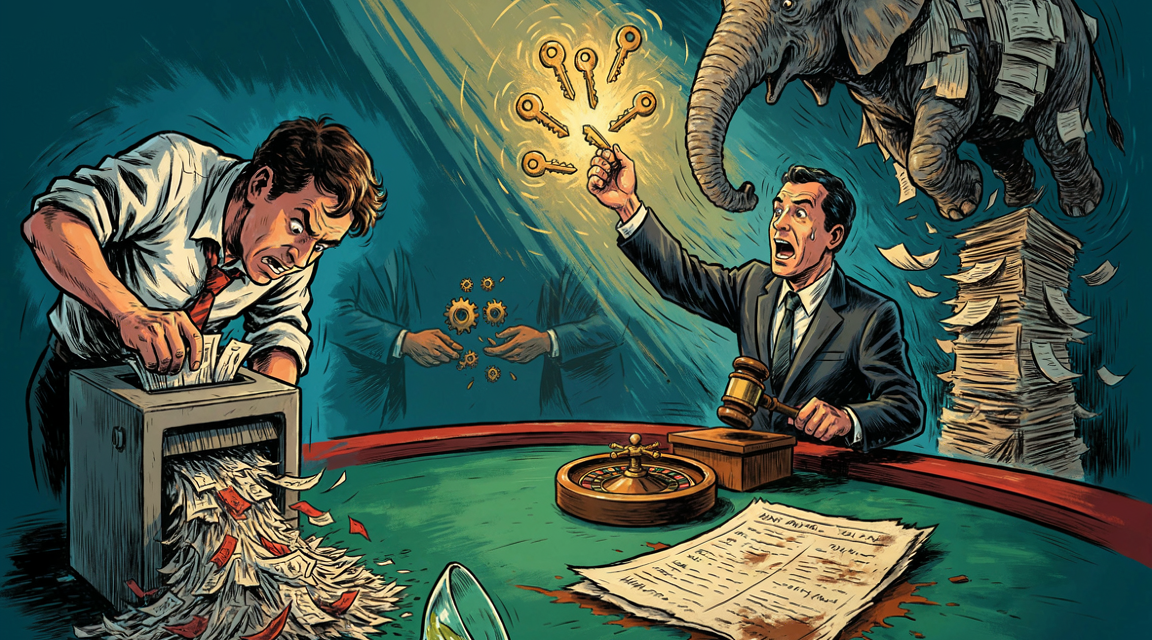
This week’s iGaming M&A is a capital-allocation audit, not a takeover parade. The deals are smaller, but they expose where buyers still see value: licences that cannot easily be replaced, rent bills that can be removed and B2B assets with customers already attached. Sellers are using transactions to lower debt and buy time; investors should ask why those fixes were left until now.
Small deals are doing the financial work
SkyCity Entertainment Group provides the clearest example. On 30 September, it began a formal UBS-led sale process for SkyCity Adelaide and appointed UBS and Chapman Tripp to approach buyers for the wider group. That follows May approaches at NZ$0.70 and NZ$0.75 a share, neither improved. With NZ$591m of net debt, SkyCity is not searching leisurely for a strategic soulmate. It is repairing the balance sheet with a casino attached.
Adelaide produced A$19.5m of underlying EBITDA, and the trend is declining. The asset still has exclusive casino rights through 2035 and a licence extending to 2085. A buyer must price both facts: weak current earnings and a regulated foothold with a long legal runway. SkyCity’s asset-realisation programme targets NZ$275m-NZ$300m in cash proceeds, plus cost reductions targeted at NZ$30m in FY27 and NZ$70m in FY28. The New Zealand online licence auction closes on 14 October and the AGM is on 21 October. Those dates give investors hard tests for execution, not another promise to “unlock value.”
A sale can create value while admitting that management failed to create enough of it internally. Buyers will pay for licence duration, property economics, cash generation and the ability to cut costs faster than the incumbent. They will not pay for a polished presentation.
Century Casinos makes the same point with cleaner arithmetic. It agreed to sell Century Mile and Century Downs racinos to Highfield Investment Group for US$16.4m, or 6.1 times EBITDA. The deal removes about US$7.5m of annual VICI rent. On a crude basis, that saving equals nearly 46% of the purchase price every year, before tax, maintenance capital and operating changes. This is not a heroic growth acquisition; it changes the cost base and improves cash retention.
Rent is treated as unavoidable until a sale forces executives to confront it. Century’s deal shows why casino M&A can work without exciting revenue growth: the return may sit in the lease, not the gaming floor. For operators, that makes property obligations a strategic variable. For investors, it is a reminder to read the rent schedule before applauding an EBITDA multiple.
Licences and compliance are the real prizes
The supply chain is changing hands too. Visualize, a New York private-equity firm, completed its purchase of eCOGRA, placing it alongside BMM Testlabs under one owner. Together, the businesses have licences or accreditations in more than 800 jurisdictions. Testing and certification sit between game suppliers, operators and regulators. Combining that reach can spread fixed technology and compliance costs, improve cross-selling and open more routes into regulated markets.
It also creates a governance problem regulators and clients should examine closely. When one financial sponsor owns more testing and certification capacity, independence, pricing and turnaround times matter more. Compliance providers are supposed to be trusted filters. If concentration weakens that trust, operators face slower approvals, higher costs or tougher scrutiny. The deal may improve efficiency, but efficiency is not a substitute for independence.
GiG Software agreed to buy 80% of 888AFRICA from evoke for EUR10.3m, payable within 10 months. The attraction is market access and operating capability in African markets; the staged payment limits the immediate cash hit. Gaming1’s purchase of Pac-Man NV, the business behind Carousel.be, is another route to a scarce Belgian B+ online licence. The technology matters. The permission to operate matters more.
Merkur, the Gauselmann group, agreed to buy seven French Le Stelsia casinos and Société Française de Casinos at a reported 195.9% premium. That premium looks absurd against a simple earnings multiple. It looks less absurd if regulated French access, local operating know-how and scarce approvals cannot be recreated cheaply. The buyer is paying for time and permission, two things a new entrant cannot buy from a spreadsheet.
Specialist B2B distribution is also attracting capital. OpenBet bought lottery sportsbook specialist OmniLogic. Primero bought Win Systems’ gaming division, bringing about 3,000 gaming positions across Latin America. Tabcorp agreed to buy BetMakers for AU$267m. These are purchases of products, distribution and installed relationships, not attempts to become everything to everyone. Suppliers with a real customer base and a specific regulatory or geographic niche can still command a cheque. Operators may gain better coverage and products; they may also face fewer independent vendors and less negotiating power.
MGM shows where scale stops paying
Then came the large, messy counterexample. Barry Diller’s People Inc. withdrew its US$48.30-per-share bid for MGM Resorts. MGM shares fell 8.6% after hours to US$34.61, and MGM remains standalone. Diller still holds about 27% and is open to a range of alternatives, so the pressure has not vanished. The bid is gone.
The share-price reaction is brutal because markets price probability, not press-release ambition. Once the bid disappeared, investors removed the deal premium and questioned MGM’s value without a buyer willing to pay up. A US$48.30 offer still has to survive financing costs, valuation discipline, board resistance, regulatory review and the basic question of whether the buyer can earn an acceptable return.
Big casino deals are capital-intensive, politically sensitive and easy to overpay for. Scale is not a strategy when the funding model breaks. For operators, a failed bid can leave management distracted and strategic uncertainty hanging over staff, suppliers and partners. For investors, it is a warning not to confuse a high offer with a high probability of completion. For prospective buyers, the cost of walking away may be lower than the cost of owning a trophy bought at the wrong price.
The next M&A dollar will be selective
Taken together, these transactions point to a more surgical form of gaming consolidation. Asset recycling is becoming a balance-sheet tool: overburdened operators will sell assets to repair debt, while buyers chase licences that are difficult to obtain, rent savings that arrive quickly and B2B businesses with embedded customers. Private equity will keep assembling quiet infrastructure where regulation turns expertise and accreditation into a toll road.
Boards should stop presenting disposals as evidence of a brilliant strategic reset when they are really overdue capital allocation. Selling Adelaide may be sensible for SkyCity, and Century’s rent relief is plainly useful, but investors should ask why those economics were not fixed earlier. Buyers need to model licence durability, compliance costs, renewal risk and integration friction rather than multiply a headline EBITDA number.
The mega-deal era is not dead; it has been forced to justify itself. Over the next wave, expect more deals that buy a permission, remove a rent bill or secure a specialist capability before they buy another sprawling operator. Players will feel the trade-off indirectly: stronger compliance and wider availability on one side, fewer independent suppliers and potentially higher fees on the other. The deals may look less glamorous than a takeover battle, but they will reveal where gaming’s real value—and its next points of risk—are accumulating.