Brazil spent years building a regulated betting market, then switched it off with almost no warning. On 25 September 2026, President Luiz Inacio Lula da Silva signed Provisional Measure 1,394, turning one of iGaming’s biggest growth bets into a forced wind-down, an earnings shock and a warning that Brazilian permission can be politically revoked.
The blackout is only the first loss. Operators paid for licences, recruited staff, built compliance systems and forecast growth on the assumption that Brazil’s rules meant something. Now companies are being asked to accept that permission can vanish before the ink is dry. That is a direct hit to earnings and a long-term tax on trust.
Brazil’s regulated betting market was killed overnight
The measure immediately bans fixed-odds betting and online casino games nationwide. Around 84 or 85 licensed operators and 25.2 million bettors are caught in the blast radius. New deposits were barred at once. Customers can withdraw funds until 23:59 on 5 October; sites and apps must go dark on 6 October; licences formally terminate on 25 October.
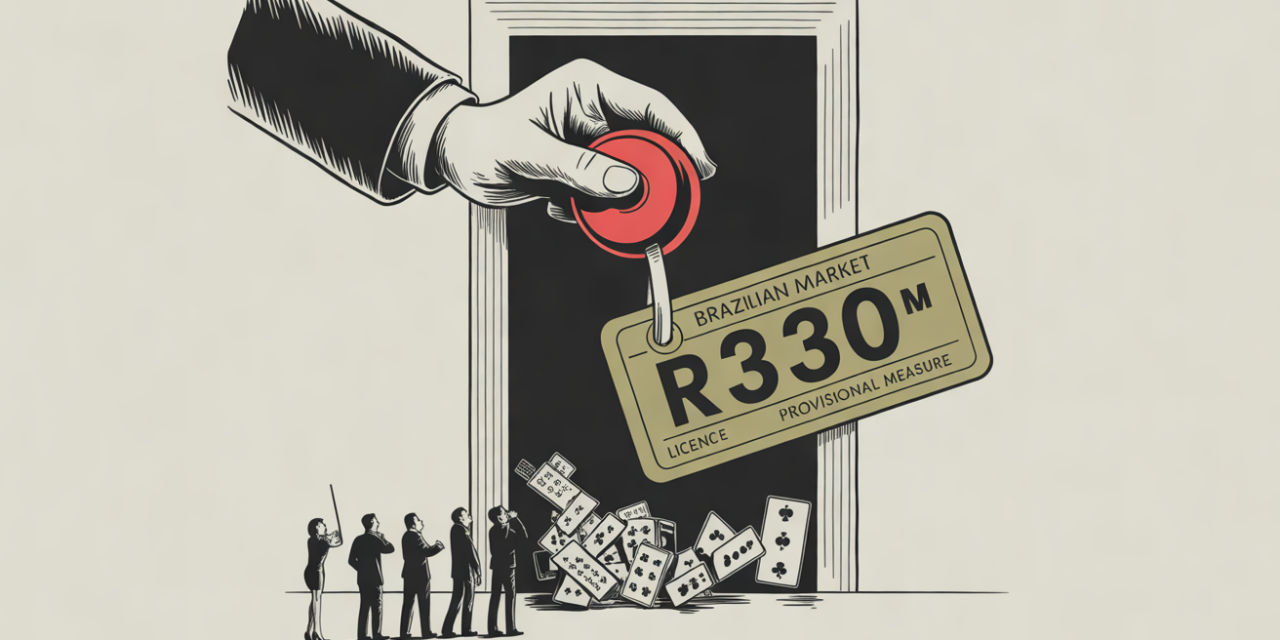
Each federal licence cost R$30 million, roughly US$5.8 million. The government is offering no refunds or compensation. That fee is only the visible loss. Operators also spent on compliance, marketing, technology and staff for a market that opened in January 2025 under the 2023 regulatory framework. Suppliers, affiliates and payment businesses made similar bets on the rules lasting.
The government cites household debt, which it says consumes 28.9% of family income. Lula has called betting sites a “cancer”. Problem gambling demands action, but a nationwide shutdown is a blunt response. A regulated market exists to make operators visible, enforce age checks and know-your-customer controls, monitor suspicious activity, support self-exclusion and collect tax. Brazil has chosen to remove the legal channel and then claim victory over the activity. Demand will not disappear because the licensed outlets do.
The legal clock and commercial clock are pulling apart
A provisional measure takes effect immediately, but Congress has 120 days to approve it. If lawmakers do not, it lapses. Companies therefore have to act as though Brazil is permanently closed while politicians decide whether the closure should survive. That forces operators to incur wind-down costs now while keeping open the possibility of a market they cannot responsibly plan around.
The timing adds political risk. Brazil’s first-round presidential election is scheduled for 4 October, one day before the withdrawal deadline, with Lula facing Flavio Bolsonaro. The ban is colliding with an election and a congressional process that could produce a reversal, an amendment or a permanent prohibition.
Legal action is already forming. The Associação Nacional de Jogos e Loterias and Abrajogo are preparing a Supreme Court challenge. Betano, operated by Kaizen, in which Allwyn owns 36.75%, is considering action. The government is seeking to block 5,209 domains. Regulus Partners puts an 85% probability on a blackout lasting at least a week.
A court victory would not restore normal trading overnight. Operators still have to stop deposits, process withdrawals, notify customers, unwind affiliates and suspend local marketing. Suppliers must decide whether Brazilian contracts are temporarily frozen or effectively worthless. Restarting an app is easy; rebuilding customer confidence, staff capacity and partner networks is not.
The earnings shock reaches beyond listed operators
European exchanges had their first trading day to react on Monday, 28 September. Investors were blindsided by the speed of the reversal and questioned Brazil’s credibility as a regulatory jurisdiction.
Entain cut its FY26 online NGR growth guidance to 4-6%, from 5-7%, and now expects to land at the low end. Allwyn withdrew its roughly 37% adjusted EBITDA margin assumption. JPMorgan estimates Brazil accounts for about 9% of Evolution’s sales, leaving the casino supplier materially exposed. Kambi, by contrast, says the impact is limited.
The uneven hit matters. A sportsbook or casino operator can lose Brazilian revenue, but the shock also travels through game studios, sportsbook suppliers, payment providers, affiliates, media businesses and local technology contractors. Some can redirect capacity. Others have Brazilian revenue embedded in forecasts, contracts and valuations, making the damage harder to remove than a single market line.
The R$30 million licence is the obvious sunk cost. The larger bill is the risk premium attached to future Brazilian investment. Investors were promised a framework and received one that lasted barely two years before a presidential measure put the commercial model at risk. Revenue can be removed from a forecast; lost regulatory credibility is harder to price and can outlast the ban.
Brazil was meant to show that a large grey market could be channelled into a taxable, supervised system. Instead, it has shown global operators that compliance spending does not protect them from political reversal. That lesson will influence bids, licence prices and capital allocation far beyond Brazil.
Prohibition sends players towards the market Brasília says it hates
The industry warning is simple: push 30 million-plus gamblers out of licensed operators and many will move to illegal sites. Play’n GO says a ban weakens channelisation and player protection. That is not a talking point that needs specialist modelling. Players follow familiar brands, links and payment routes when legal access is cut.
Some customers will wait for a court decision or political reversal. Many will follow offshore operators and unlicensed sites. Those businesses will not give Brazilian regulators reliable data, responsible-gambling tools, effective age verification or meaningful consumer redress. Blocking 5,209 domains may create friction, but every blocked address leaves demand searching for another route.
The contradiction is hard to miss. If household debt and harmful gambling are the concern, removing oversight makes both harder to measure and control. The ban may reduce legal deposits while increasing the share of activity outside any enforceable protection regime. That is not consumer protection; it is consumer abandonment with better press releases.
The next 120 days decide whether this is a blackout or a permanent exit. Congress can approve the measure, let it lapse or rewrite it. The Supreme Court can suspend it. The election can change the incentives. Even a lapsed measure would not reopen Brazil on January 2025 terms: operators will demand credible legal protection before returning, fewer companies may bid, licence fees will look harder to justify and investors will price in another reversal.
Brazil can still reverse course, but a political retreat will not restore the old market. The immediate test is whether Brasília uses the next 120 days to build a durable policy or confirms that a Brazilian iGaming licence is expensive, short-lived and revocable. That decision will shape operator earnings, supplier investment and player protection long after the withdrawal window closes.