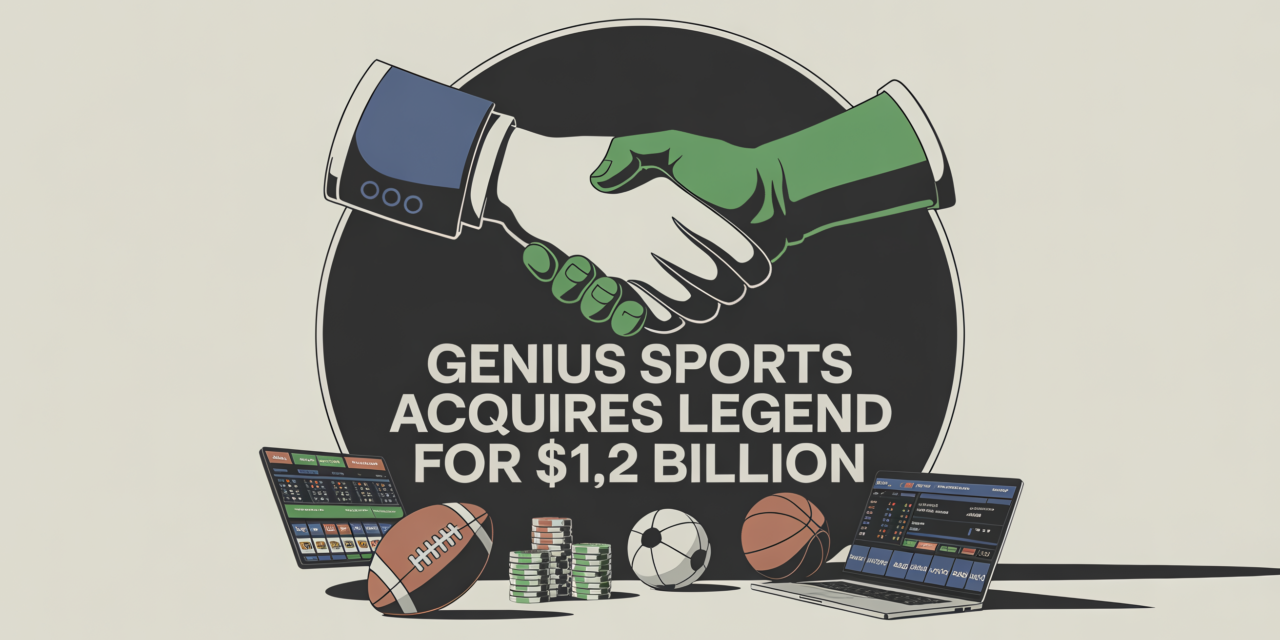
Genius Sports just dropped a bombshell in the sports betting and iGaming world: a definitive agreement to acquire Legend, the affiliate media powerhouse behind brands like Covers.com, for up to $1.2 billion. That breaks down to $900 million at closing ($800 million cash plus $100 million in stock) and an earnout of up to $300 million tied to performance targets over the next two years.
The market’s reaction? Brutal. Genius shares tanked 25% on the announcement, dropping to around $6.36 from $8.55. Investors clearly smell risk—debt-fueled deal, integration headaches, or simply paying a premium for eyeballs in an industry where traffic can evaporate with one Google algorithm tweak or regulatory squeeze.
Legend: dominating iGaming affiliate game in the shadow of Better Collective
Founded more than 20 years ago by Nick Kisberg, Legend has quietly built one of the most formidable affiliate networks in sports betting and online casino media. It owns or part-owns over 25 global brands, including the high-traffic Covers.com (acquired in 2020 as Legend’s entry into sports betting), Casino Guru, and Casino.org.
In 2025, the group clocked 320 million annual visits from 118 million unique visitors, with more than two-thirds returning regularly. That’s not just traffic—that’s a loyal, high-intent audience of sports fans and gamblers who click through to sportsbooks and casinos. Kisberg called the deal a point of pride: “Joining forces with Genius Sports brings together two world-class teams, unlocks unparalleled growth opportunities for our partners and products and gives us an even stronger platform to scale.”
Genius Sports, formed in 2016 from the merger of Betgenius and SportingPulse International, has long been the behind-the-scenes data and tech engine for the global betting ecosystem. Official partner to the NFL, English Premier League, DraftKings, ESPN, and over 1,000 sports organizations across 150+ countries, it supplies real-time data, odds feeds, and fan engagement tools.
CEO Mark Locke framed the acquisition as a game-changer:
“This deal accelerates our strategic and financial objectives, supercharges fan monetization and builds a fully integrated sports and gaming media network. For Genius Sports and our global partners, it delivers more data, more audience, more inventory and greater monetization of sports fans.”
Translation: Genius is tired of being the data wholesaler. Owning Legend means controlling the top of the funnel – content that attracts fans, affiliates that convert them, and data that optimizes everything in between.
Financials: Big Jump, Bigger Debt
Genius reported preliminary 2025 revenue of $669 million and adjusted EBITDA of $136 million. Post-acquisition, the company has lifted its 2026 guidance to ~$1.1 billion in revenue and $320–330 million in adjusted EBITDA. By 2028, it now targets $1.6 billion in revenue with ~35% EBITDA margins and at least 60% free cash flow conversion.
The deal is being funded partly with an $850 million Term Loan B. Pro forma leverage stays below 3.0x, with rapid deleveraging expected. Management promises immediate accretion to margins and cash flow.But here’s the unvarnished truth: That’s a lot of debt in a cyclical industry prone to regulatory shocks, economic slowdowns, and operator budget cuts. If sports betting growth stalls or affiliates face more headwinds (tighter compliance, direct operator marketing, SEO volatility), the earnout could become a mirage and the leverage a burden.
The Deeper Play: Owning the Customer Acquisition Chain
At its core, this isn’t just a media buy – it’s a structural shift in how value is captured in sports betting and iGaming.The root cause is simple: customer acquisition costs have exploded. Operators pay affiliates handsomely because third-party media drives qualified traffic cheaper than paid ads in many cases. But as markets mature (especially in the US), operators push direct relationships, regulators tighten affiliate rules, and search engines punish low-quality content.
Genius, armed with official league data, now owns the content layer that feeds that traffic. Integrate Legend’s sites with Genius’s FANHub platform, syndicate to partners like Sports Illustrated and Yahoo Sports, and suddenly you have a closed-loop system: data informs content, content drives engagement, engagement feeds betting partners (including Genius clients), and monetization flows back upstream.
It’s vertical integration 101. Genius stops being a vendor and becomes the platform. Higher margins come from cutting out middlemen, stronger cash flow from recurring affiliate revenue, and scale from combining 118 million uniques with official sports rights.The risk? Execution. Merging tech stacks, cultures, and compliance regimes across global markets is rarely smooth.
And if Google decides affiliate content is “thin,” or if regulators in key jurisdictions (UK, US states) clamp down harder, that $1.2 billion price tag could look like a very expensive lesson in hubris.
Bottom Line
This is the biggest bet Genius Sports has ever made—and one of the largest in recent iGaming history. If it works, Genius becomes the undisputed king of sports fan monetization. If it falters, the debt and integration risks could haunt the balance sheet for years.For now, the industry watches. Kisberg cashes out a career’s work. Locke swings for the fences. And shareholders? They just voted with…