
Gentoo Media just dropped its Q4 2025 numbers, and while the headline figure of €98.6 million in annual revenue sounds respectable, the real story is buried in the debt line: they’re scrambling to refinance €120 million in bonds before their current facilities come due. When a company leads with revenue figures but immediately pivots to « we’ve hired investment banks for refinancing discussions, » you know where management’s actual focus lies.
Let’s cut through the corporate euphemisms and examine what’s actually happening here.
The Numbers: Solid Operations, Uncomfortable Leverage
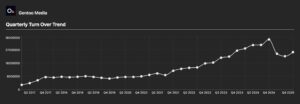
Q4 2025 delivered €25.5 million in revenue with €14.9 million in adjusted EBITDA—a respectable 58% margin that shows Gentoo’s core affiliate business works – less than before but still better than some others competitors . Full-year figures hit €98.6 million revenue and €41.4 million EBITDA, generating €33 million in operating cash flow.
Here’s the problem: net interest-bearing debt sits at 2.82x EBITDA. That’s not catastrophic in today’s rate environment, but it’s uncomfortable enough that management felt compelled to announce refinancing plans in the same breath as their results. When your debt multiple starts creeping toward 3x and your bonds need rolling over, you don’t have the luxury of waiting for optimal market conditions.
January Trading: The Non-Update Update
Management’s statement that January 2026 « aligned with internal forecasts and budget assumptions » is corporate speak for « nothing dramatic happened. » This is the financial reporting equivalent of « no comment »—technically information, practically meaningless. If January had been spectacular, they’d have said so. If it had been terrible, they’d have blamed external factors. « Aligned with forecasts » means exactly what it sounds like: flat and unremarkable.
The Refinancing Dance: €120 Million in New Debt
Gentoo has appointed ABG Sundal Collier and Pareto Securities to organize investor meetings starting February 2026. Translation: they’re hitting the road to convince bondholders that a three-year senior secured floating rate facility totaling €120 million (split between SEK and EUR tranches) is a good idea.
Let’s be clear about what’s happening here: this isn’t growth capital. This is pure refinancing—using new debt to pay off old debt plus their credit facility. The company is essentially asking the market to reset the clock on their obligations while interest rates remain elevated and the iGaming sector faces regulatory headwinds across multiple markets.
Why Floating Rate? Why Now?
The choice of a floating rate structure is telling. Fixed-rate bonds would offer certainty but likely require higher coupons in today’s environment. Floating rate suggests either: (a) management believes rates will decline over the three-year term, or (b) they couldn’t get fixed-rate terms they found acceptable. Given that central banks have barely begun cutting and iGaming isn’t exactly a defensive sector, this looks more like option B dressed up as strategic flexibility.
The timing—early 2026, well before any stated maturity dates—suggests their existing facilities have covenants or terms that made early refinancing preferable to waiting. That’s not necessarily alarming, but it does indicate limited negotiating leverage.
2026 Guidance: Modest Growth on a Favorable Calendar
Gentoo projects 2026 revenue between €105-115 million (6-17% growth) with EBITDA of €49-54 million (18-30% growth). Operating cash flow is forecast at €37-41 million, up from €33 million in 2025.
These projections conveniently lean on the 2026 FIFA World Cup, which management explicitly highlighted as a driver. Here’s the uncomfortable truth about event-driven growth: it’s temporary, unpredictable, and has been priced into affiliate economics by operators who know exactly when these tournaments occur.
The World Cup Excuse
Management noted that 2025 lacked « comparable global tournaments, » which supposedly limited seasonal activity. This is affiliate marketing 101: blame the calendar when growth disappoints, credit your strategy when events deliver. The reality? The World Cup will drive user acquisition costs higher across the entire affiliate ecosystem as everyone competes for the same surge in search volume and betting intent.
Gentoo’s ability to capture outsized returns depends on whether their SEO positions and brand partnerships are strong enough to weather the bidding wars. Given they’re refinancing rather than investing aggressively, it suggests a defensive rather than expansionist posture.
Operational Reality: Strong Deposits, But Who’s Paying?
The company reported « record levels » of end-user deposits exceeding €200 million at partner operators during Q4. That sounds impressive until you remember these aren’t Gentoo’s deposits—they’re customer funds flowing to operators who pay Gentoo a revenue share or CPA.
The critical question never answered in these releases: what’s the margin structure on those deposits? Are they primarily revenue share deals (stable but lower margin) or CPA arrangements (higher upfront margin but no long-term value)? The shift in affiliate economics over the past two years has been brutal, with operators increasingly demanding lower rev-share percentages and longer payment terms.
The « Streamlined Cost Base » Reality
Gentoo boasts a « streamlined cost base » designed to support margin expansion. Let’s translate: they’ve cut staff, reduced marketing spend, or both. For an affiliate business, a lean cost structure is good—until it prevents you from competing for high-value keywords or developing new content assets.
The statement that « investment commitments for the coming year are described as limited » confirms this conservative approach. While fiscal discipline sounds responsible, in the affiliate game it often means ceding ground to competitors willing to spend. When you’re refinancing debt rather than funding growth, you don’t have much choice.
The M&A Hangover: €38 Million in Legacy Payments
Here’s where things get interesting: Gentoo spent approximately €38 million in 2025 on cash outflows « linked to mergers, acquisitions and corporate separation activities originating from earlier periods. » That’s nearly equal to their annual EBITDA, and it represents the bill coming due from previous growth-through-acquisition strategies.
Add another €5 million in « restructuring and operational improvement programmes »—corporate speak for cleaning up the mess from those acquisitions—and you’ve got €43 million in non-operational cash burn. This is the hangover from roll-up strategies executed when money was cheap and growth projections were optimistic.
The 2026 Deferred Payment Relief
The good news? Remaining M&A-related payments drop to approximately €3.5 million in 2026. This means the bulk of legacy obligations have been cleared, which should meaningfully improve cash generation. But it also means 2025 cash flow figures were suppressed by one-time items, making year-over-year comparisons somewhat meaningless.
The real test comes in 2027 and beyond: can Gentoo grow organically without the acquisition tailwind that built their current portfolio? The shift to « limited investment commitments » suggests they’re not banking on aggressive organic expansion.
What This Actually Means for iGaming
Gentoo’s situation is a microcosm of the broader affiliate sector’s challenges: solid operational businesses burdened by debt from acquisition sprees executed in a different rate environment, now facing margin pressure from operators and needing to refinance on less favorable terms.
The affiliate model works—Gentoo’s margins prove that. But the financial engineering that fueled consolidation in 2020-2022 is unwinding. Companies that borrowed heavily to roll up smaller affiliates now face refinancing risk while operators simultaneously squeeze their economics.
The Real Question Nobody’s Asking
If Gentoo’s business is as strong as the EBITDA margins suggest, why do they need ABG Sundal Collier and Pareto Securities to convince investors to refinance? The answer is probably that while the business is solid, it’s not growing fast enough to make bondholders confident about covenant compliance or interest coverage under current terms.
The 2026 guidance shows modest growth heavily dependent on the World Cup windfall. Strip out that one-time boost, and you’re looking at a mature business trying to service acquisition-era debt. That’s not a crisis, but it’s not a compelling growth story either.
The Bottom Line
Gentoo Media runs a functional affiliate business generating decent cash flow and respectable margins. But the €120 million refinancing overshadows everything else in this release. When a company’s primary 2026 initiative is convincing investors to roll over their debt, you’re looking at financial maintenance, not strategic expansion.
The 2026 guidance looks achievable given the World Cup tailwind, but the real test comes in 2027 when the tournament boost fades and Gentoo needs to demonstrate organic growth while servicing freshly refinanced floating-rate debt in an uncertain rate environment.
For investors and industry observers, the takeaway is simple: Gentoo’s operations are fine, but their capital structure remains a work in progress. The refinancing will either give them breathing room to rebuild growth momentum, or it will simply reset the clock on the same fundamental challenge—how to grow an affiliate business fast enough to comfortably service debt accumulated during the roll-up era.
Management’s decision to announce this refinancing proactively rather than wait for stress suggests competent financial stewardship. But competence and growth are different things. Right now, Gentoo is focused on surviving the debt cycle, not disrupting the affiliate market.
Disclaimer: This article and its accompanying images may have been enhanced using AI tools to ensure smoother content delivery and visual appeal.