
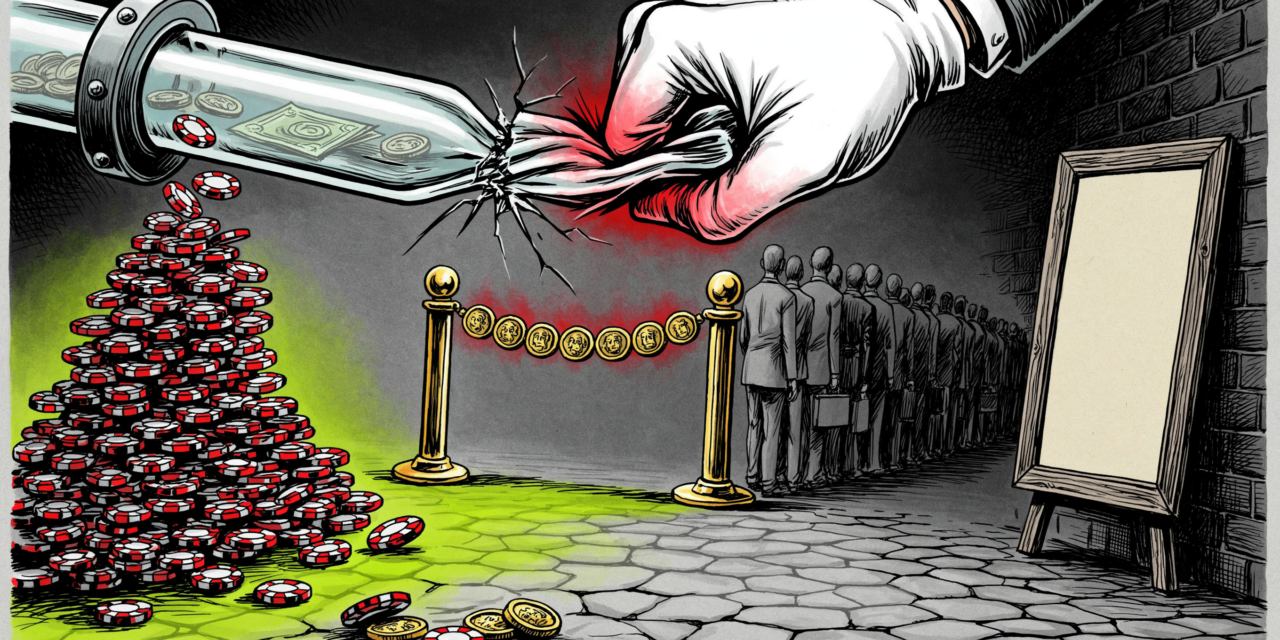
A gambling ban is cheap to announce; making the money stop is harder. Australia is putting payment firms between gamblers and designated services, while New Zealand charges NZ$15m for a place in a licensing queue that still guarantees no licence.
Australia targets payment rails
ACMA published guidance on 17 November to implement section 15J of the Interactive Gambling Act 2001. Inserted by the Interactive Gambling Amendment (Gambling Reform) Act 2026, enacted on 26 August, the provision creates Part 2C from 1 January 2027. It requires authorised deposit-taking institutions and payment-system participants to take “reasonably practicable” steps to prevent payments or transfers to designated interactive gambling services: prohibited online casino-style games and slots, or unlicensed wagering and lottery offered to Australians, whether the operator is domestic or offshore.
The duty runs one way: it covers money going to a service, not payouts to customers. “Funds” includes digital units of value, including digital currency, potentially placing banks, credit unions, gateways, card schemes, acquirers, processors, wallets and some cryptocurrency providers in scope. A breach carries up to 1,000 penalty units. Good-faith blocking is protected: firms may hold a payment for up to 28 days and return it if it is not caught.
ACMA’s guidance says, “Entities should not rely only on information supplied by the ACMA or wait until a particular service or transaction is brought to their attention.” Its blocked-site list and licensed-wagering register alone are “unlikely to be sufficient”; outsourcing does not discharge responsibility. Firms are expected to document risk assessments, governance-approved proportionate controls, training, testing, monitoring and records, including changes to business models, merchant identifiers, payment details and alternative rails. No single technical solution is prescribed. The initial guidance is advisory; formal guidance is possible under section 15K.
That leaves firms choosing controls before ACMA decides whether they were enough, with a civil penalty of up to 1,000 penalty units. Banks cannot infer a gambling licence from a merchant code, but can track identifiers and payment behaviour. Under-blocking risks enforcement; false positives create friction for consumers and legitimate businesses. ACMA has also formally warned two former AFL players over promoting unlicensed casino Vegastars and blocked 12 offshore gambling and affiliate sites. The regulator still targets operators, but the perimeter now includes their funding routes.
New Zealand prices licence access
DIA ran an ascending-clock auction for up to 15 online casino licences from 29 September to 12 October. Thirty-two bidders competed over 10 rounds, and the price settled at NZ$15m per licence. A winning slot is permission to apply, not a licence: DIA says a successful bid “does not guarantee that a licence will be granted.” Applications opened on 20 October; licences are expected in early 2027.
The stop date is firmer. Operators serving New Zealanders before 1 May 2026 that have not applied must stop online casino gambling from 1 December. Applicants may continue trading while decisions are pending, but cannot advertise to New Zealand customers; operating without a licence after the deadline carries fines up to NZ$5m. PokerStars exits on 26 November, five days early. Its cutoff covers people physically in New Zealand and accounts registered to a New Zealand address, even when the holder is overseas. Balances remain withdrawable and unstarted tournament entries are refunded.
WPT Global exits on 30 November; industry reports say GGPoker and 888 have confirmed exits without dates. DIA plans a public register of licensed sites and a registration icon for consumers. The NZ$15m payment buys entry to an application process, not certainty, favoring balance sheets over brand recognition. Flutter Entertainment did not secure the right to apply, showing brand scale alone offered no protection.
Enforcement moves upstream
The same upstream logic appears elsewhere. In the Netherlands, KSA chairman Michel Groothuizen said on 14 October, marking five years of the regulated market, that fines against illegal operators are rarely collected. The regulator is trying instead to make illegal sites harder to find and cut payment channels. A fine nobody collects changes little; lower visibility or a broken payment route can limit customer acquisition and service. In South Korea, police arrested 6,310 people and froze KRW 154.8bn in cyber-gambling proceeds, shifting focus from players toward vendors and platform suppliers. Affiliates and suppliers face greater counterparty risk: a grey-market deal can sour when an operator loses a payment rail, even without losing a licence. Distribution depends on whether transactions complete, not only whether brands attract demand.
Brazil tests the legal route
On 16 November, the Attorney General’s Office filed four supporting documents with the Supreme Federal Court defending the suspension of licensed online betting under Provisional Measure 1.394. Introduced on 25 September, the measure sits within challenges overseen by Justice Luiz Fux; it still needs a congressional vote and could lapse without one. Meanwhile, a National Secretariat for Digital Rights report logged 60,677 instances of illegal betting promotion from 25 September to 9 November. The government calls that enforcement; critics say it shows unlicensed offers remain widely available. Closing the legal route does not erase demand or promotion.
Allwyn, which holds 36.75% of Betano, told analysts Betano is ready to resume if the market reopens and has mitigation plans for other outcomes. Flutter booked an $873m impairment on Brazil and exited; Entain’s Brazilian net gaming revenue fell 36% in Q3. These outcomes price uncertainty, not settle the policy argument. If the legal rail closes, payments can reroute into illegal markets while legal status remains unsettled. The next test is whether Brazil reopens its licensed route, and whether Australia’s payment duty from 1 January 2027 and New Zealand’s licences expected in early 2027 make illegal offers harder to reach or move demand outside the regulated system. Operators lose legal access first; consumers and legitimate businesses bear the cost of misclassified transactions. Without an enforceable substitute, demand can move beyond regulators’ control.
